
Honeywell Duct Repair & Sealing in Frankford: A Homeowner’s Guide
If you have a Honeywell zoning system and one room still can’t hold temperature, the problem probably isn’t the thermostat or the damper. It’s the duct upstream of it losing pressure before the signal even executes. A zone damper is a mechanical answer to a pressure question, and if the duct feeding that zone leaks, the answer arrives at the wrong hallway. This guide explains how sealing and repair interact with Honeywell equipment in a Frankford home, and what to check before anyone starts replacing controls. If you’d rather have a pro look at it than climb through the attic yourself, call (866) 690-7933.
Why Honeywell Zone Dampers Depend on Duct Pressure
A Honeywell zone damper doesn’t measure airflow. It moves to a position and trusts that the static pressure behind it will do the rest. That trust is earned by the ductwork. When a supply run leaks, the pressure in that zone drops, and the damper ends up doing mechanical work it wasn’t designed for: opening wider to compensate, cycling more often, or failing to seat fully at the end of its travel because the actuator is fighting a pressure differential that shouldn’t exist.
In Frankford’s older rowhouse stock, where long branch runs often pass through unheated spaces, this shows up as a room that’s cold in winter and warm in summer no matter what the Honeywell panel says. The panel is doing its job. The duct isn’t holding the pressure the panel assumes.
Three things a leaky duct does to a zoned system:
- Pressure drops upstream of the damper. The zone calls for air, gets less than it expects, and the thermostat keeps calling.
- The bypass duct (if equipped) works overtime. It shoves excess air back to the return, which wastes blower energy and unbalances the other zones.
- The actuator wears faster. Dampers that cycle constantly against a pressure fault don’t last as long as dampers that open and close cleanly.
That’s why “my Honeywell zone doesn’t work” often turns into a duct integrity question, not a controls question.
The Duct Sections to Inspect First in a Honeywell-Equipped Home
Not every duct section matters equally. In a home with Honeywell zoning, three areas fail more often than the rest, and a technician who knows where to look finds the problem in minutes rather than hours.
- The plenum connections. Where the supply trunk meets the air handler, tape and mastic age out. A gap here robs every zone at once, so the system looks “weak everywhere” when the fault is one joint.
- Branch takeoffs near zone dampers. The fitting right before a Honeywell damper is a pressure choke point. If the takeoff is loose or the flex collar is crushed, the damper gets starved even when the trunk is fine.
- The bypass duct, if equipped. Bypass runs are often installed with minimal support and no sealing at the tee. When the bypass leaks, the system can’t maintain the pressure the zoning logic expects, and every zone drifts.
In Frankford, where basements and crawlspaces routinely hold the trunk and the takeoffs run up through interior walls, all three of these are accessible enough to check without tearing anything apart. We start there before touching a single Honeywell control.
Mastic and Aeroseal vs. Mechanical Fasteners Near Honeywell Dampers
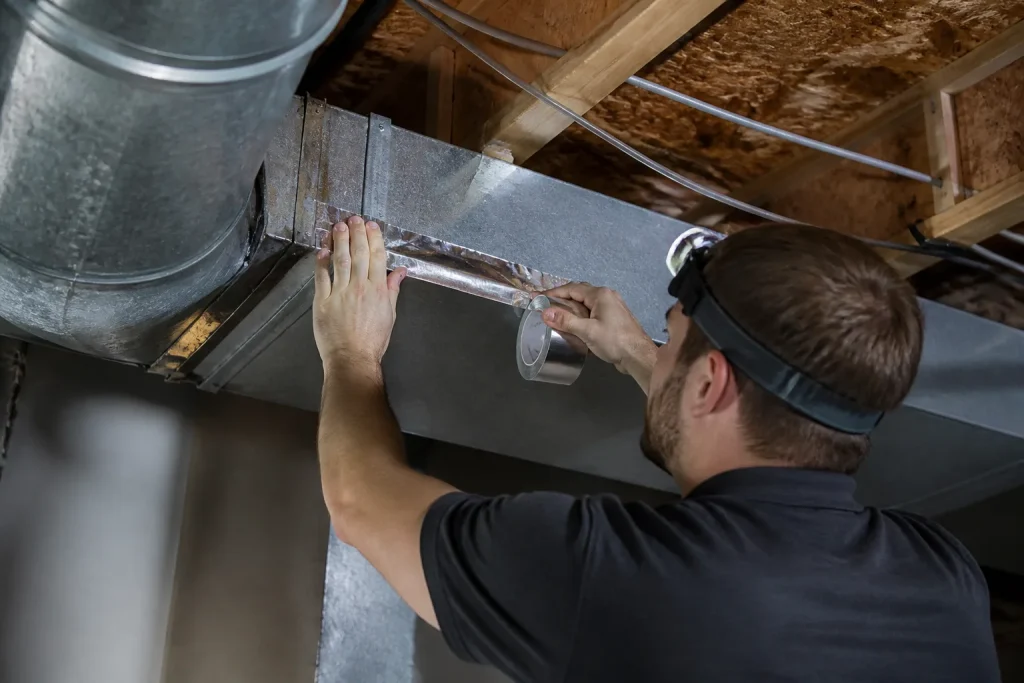
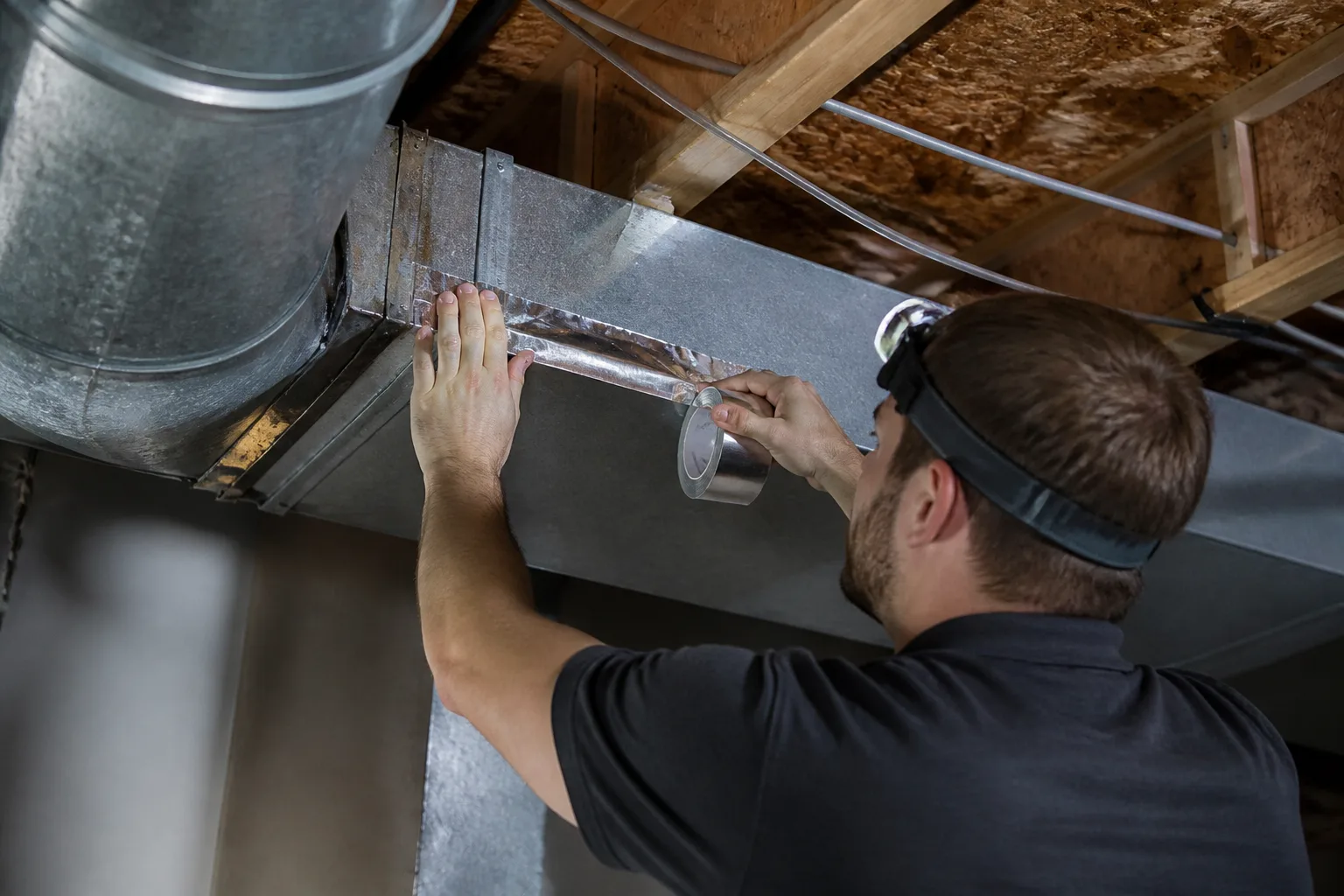
Flex duct running near a Honeywell damper actuator needs to be sealed with mastic or an aerosol sealant, not just zip ties and foil tape. The reason is movement. Damper actuators cycle, and flex duct near them flexes slightly with every cycle. Mechanical fasteners work loose over months. Mastic and aeroseal bond to the duct surface and stay put through the same movement.
The other reason is pressure. Mechanical fasteners seal a joint; they don’t seal a seam. In a zoned system, the seam is exactly what leaks. Mastic brushed over the collar and the seam, plus an aerosol seal applied from inside the duct, closes the entire run rather than the joint alone.
In our experience on Frankford systems, the difference shows up as damper behavior after the seal cures. A damper that used to hunt for position settles into a clean open/closed cycle. That’s the signal that the duct is now holding pressure the way the Honeywell panel assumes it will.
Controls Problem or Duct Problem? How to Tell
Diagnosing a Honeywell zoning issue means separating the controls question from the duct question before anyone starts replacing parts. The steps a technician should walk through:
- Read the panel. If the Honeywell zone panel shows a zone calling for air but the thermostat in that room isn’t reaching setpoint, the fault is downstream of the panel, not the panel itself.
- Check damper position at the actuator. If the damper is open but the room is still short on air, the duct is losing pressure before the damper. If the damper won’t move, that’s a controls fault.
- Measure static pressure at the trunk and at each zone. A large gap between trunk pressure and zone pressure points to a leak. A uniform low pressure across all zones points to the air handler or the return.
- Inspect the three known failure points. Plenum, branch takeoffs, bypass. If one of those leaks, sealing usually restores zone balance without touching the Honeywell controls.
This is the step most homeowners in Frankford skip. A thermostat swap feels productive. It almost never fixes a zoned system that’s fighting a duct leak.
What a Proper Sealing Job Includes on a Honeywell-Zoned System
A correct sealing job on a Honeywell-zoned system is not finished when the mastic is dry. It’s finished when each zone holds its target pressure across a full cycle. That means a post-seal pressure test on every zone, not just the main trunk, and a check that the dampers cycle cleanly after the seal cures.
The full sequence looks like this:
- Seal the plenum connections, branch takeoffs, and bypass tee.
- Apply aerosol sealant to the branch runs, especially where flex duct runs near Honeywell actuators.
- Verify static pressure at the trunk after the seal cures.
- Verify static pressure across each zone individually.
- Cycle each Honeywell damper and confirm it seats cleanly at both ends of its travel.
- Compare before-and-after pressure readings with the homeowner.
On Frankford homes with Aprilaire filtration in the return, the sequence also includes a check that the filter isn’t adding enough pressure drop to undo the sealing gains. It’s a two-minute step that prevents a call-back.
What happens when you call
- 1
A real person answersNo phone trees – you reach a local pro.
- 2
You get an upfront price rangeHonest numbers before anyone is dispatched.
- 3
A background-checked tech heads outLicensed & insured, dispatched right away.
- 4
You approve before work beginsNothing starts until you say go.
When to Call a Pro
Some of this you can check with a flashlight: tape peeling at the plenum, a crushed flex collar, a bypass duct hanging loose. What you shouldn’t do yourself is open the air handler, pull a Honeywell damper actuator, or run a pressure test without the right gauge. Zoned HVAC systems hold pressure and electrical connections at the same time, and the actuator wiring is live whenever the panel is calling. A trained technician handles that safely; a homeowner working by phone flashlight usually doesn’t.
If the room still won’t hold temperature after a visual check, that’s the moment to bring in someone with contractor-grade equipment. Rotary brush systems like Rotobrush and Nikro HVAC cleaning units let a technician see and clean the interior of the duct rather than guess at what’s inside it. Abatement Technologies negative-air machines keep the debris contained during the work, which matters in a Frankford rowhouse where the return is never far from the living room.
The Bottom Line
Honeywell zoning is only as good as the duct holding the pressure behind each damper. If a zone won’t hold temperature, check the plenum, the branch takeoffs, and the bypass before replacing a thermostat. Seal with mastic or aerosol sealant, not mechanical fasteners, especially near damper actuators. And always test pressure zone by zone after the seal cures, not just at the trunk.
If you’re in Frankford and need help, Air Duct Cleaning Frankford offers free estimates. We can test the zones, seal the leaks, and confirm the Honeywell system is getting the pressure it needs. For the broader service picture, see duct repair & sealing. Call (866) 690-7933.
Frequently Asked Questions
Because the duct feeding that zone is losing pressure, so the thermostat in the room keeps calling for air the damper can’t deliver. The damper cycles trying to hold a setpoint the leaking duct won’t let it reach. Sealing the branch takeoff usually stops the cycling. Call (866) 690-7933 for a free estimate.
No. Foil tape works loose as the actuator cycles, and the joint opens again within months. Mastic or aerosol sealant bonds to the duct surface and holds through that movement. Call (866) 690-7933 to have the joints sealed properly.
If the panel shows a zone calling and the damper is open but the room is still short on air, the leak is in the duct, not the panel. A static pressure reading at the trunk and at each zone confirms which side is at fault. Call (866) 690-7933 for a diagnostic visit.
Yes. A leaking return pulls unfiltered air around the Aprilaire filter rather than through it. Sealing the return and the plenum makes the filter do the job it was installed for. Call (866) 690-7933 for a free estimate.
You should get before-and-after pressure readings for each zone, taken with a gauge rather than described in words. Ask to see the readings before the technician packs up. If they can’t produce them, the job isn’t finished.
Most zoned systems hold a seal for years once the joints are properly mastic-coated. The sections that fail first are the plenum and the bypass tee, so those are worth a visual check whenever the system starts drifting. Call (866) 690-7933 to schedule one.
Written by the team at Air Duct Cleaning Frankford.
Need Air Duct Cleaning Help?
Call Air Duct Cleaning Frankford - the local pro we connect you with is licensed and insured, here with fast help in Frankford.
(866) 690-7933