
Nikro Duct Repair & Sealing in Frankford: A Homeowner’s Guide
Most homeowners in Frankford have never heard of Nikro Industries. Every serious duct technician has. Nikro builds the negative-pressure machines and sealing equipment the trade actually relies on, and the difference between a Nikro-equipped job and a hardware-store vacuum job shows up in one place: the weight of the debris that comes out of your ducts. This guide explains what that gear does, how internal sealing works, and the questions to ask before you hire anyone in Frankford.
What does Nikro equipment actually do during a duct job?
Nikro’s negative-air machines pull the entire duct system into a controlled vacuum while a rotary brush and air whips knock debris loose inside. Air leaves the machine through staged filtration, including HEPA stages on the units built for indoor work, so the exhaust coming back into your Frankford home is cleaner than the air going in. That matters in a rowhouse where the machine sits two feet from the living room couch.
The practical difference from a shop vac isn’t horsepower on a spec sheet. It’s containment. A consumer vacuum pressurizes one end of a duct and leaks dust out of every loose joint. A Nikro unit holds the whole system under negative pressure, so contaminants travel toward the machine instead of into the room. We pair ours with Abatement Technologies negative-air units when a job involves mold or renovation debris, because the same principle applies: control the pressure, and you control where the dust ends up.
What you should notice as a homeowner:
- The machine stays running for the length of the job, not pulsed on and off.
- Hoses are sealed to the duct openings with tape or collars, not just pushed in.
- Exhaust air is filtered, so you don’t smell or see dust in the room.
- The technician knows the CFM rating of the unit and sizes it to your system.
How Nikro sealing tools work, and when internal sealing beats mastic
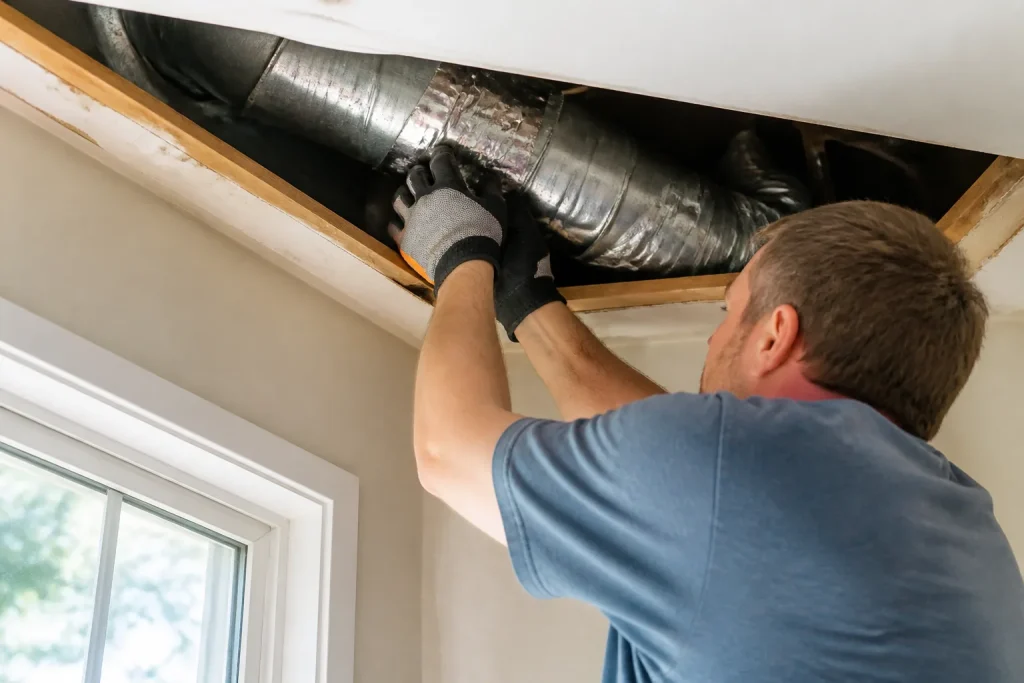
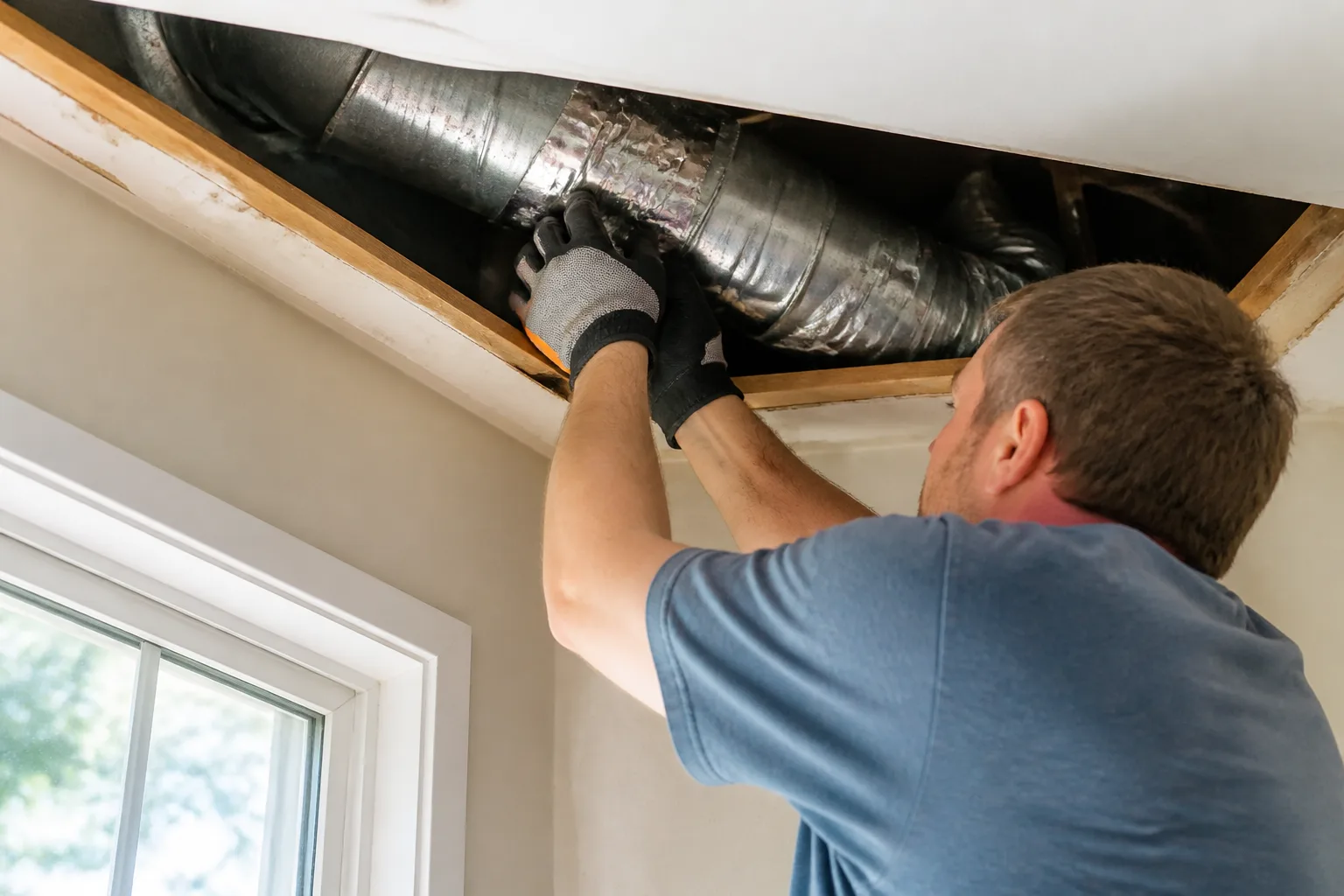
Duct sealing comes in two forms. External sealing means brushing mastic over joints you can reach. Internal sealing means injecting a sealant mist into the duct run under controlled pressure so it coats the leaks from the inside. Nikro’s injection equipment is built for the second method, and in Frankford’s older homes it’s often the only option that reaches the leaks that matter.
Here’s why. A lot of Frankford housing stock has duct runs buried in wall chases, ceilings, or joist bays where no one is getting a brush and a tub of mastic. External sealing on the accessible joints is worthwhile and we do it, but the leaks that cost you money are usually the ones you can’t see. Internal injection reaches them without demolition.
The pressure control on the injection unit matters just as much as the sealant. Too much pressure in aged ductwork and you’ll blow apart seams that were merely tired. Nikro’s adjustable controls let a technician dial back to what an older system will tolerate. That’s the difference between sealing a duct and destroying one.
If you’d rather have the whole picture before booking anything, our duct repair & sealing page covers what a typical sealing job involves from start to finish.
How to tell whether a contractor is really using Nikro equipment
Every duct company in Frankford can put “Nikro” on a website. Fewer are loading a Nikro machine into your basement. Ask these questions on the phone, before anyone shows up, and listen for whether the answers are specific.
- “What machine are you bringing, and what’s its CFM rating?” A technician who runs the gear knows the number. A salesperson guesses.
- “Does it have HEPA filtration?” Straight answer, no hedging.
- “Show me the unit when you arrive.” Branding is molded into the housing on professional equipment. It takes ten seconds to confirm.
- “How will you measure the result?” Static pressure readings before and after are the honest answer. “You’ll feel the difference” is not.
- “What’s the debris weight?” A serious operation tracks what comes out of the system.
One caution on the last point: debris weight is a useful indicator of how loaded a system was, not a score to brag about. A lightly soiled system that yields little debris has been cleaned correctly. A machine that fills a bag every time tells you something about the machine, not necessarily the ducts.
Why Frankford’s older duct systems need adjustable pressure
Much of Frankford’s housing was built before flex duct and fiberboard duct were common, and a good share of the systems have been retrofitted since. That mix is where pressure control stops being a technical nicety and becomes a real risk.
Aged flex duct that has been sitting in a hot attic for years gets brittle. Fiberboard duct can crumble at the seams under aggressive agitation. Run a high-pressure tool through either one and you don’t clean the duct, you perforate it. Now you’ve got a system that leaks worse than when the technician arrived, and the homeowner pays twice.
Nikro’s adjustable controls let a technician match pressure and agitation to the material in front of them: softer and slower through tired flex, firmer through rigid metal trunk line. It’s the same reason a woodworker doesn’t use one grit of sandpaper. The tool has to suit the material, and in older Frankford homes you’ll find three or four materials in a single system.
What results should you actually expect?
The measurable outcome of a properly equipped job is a drop in static pressure and a rise in airflow at the registers. Static pressure is the resistance inside your duct system, and when it’s high, your blower works harder to move the same air. A system that comes in high before a cleaning and closer to the manufacturer’s target after is a system that was genuinely restricted.
Debris recovery weight tells you how much was sitting in there. Before and after photos of your own ducts tell you what the inside looked like when the technician finished, which is the part most homeowners actually care about because it’s verifiable.
After cleaning, ask whether your system could use a filtration upgrade. Honeywell and Aprilaire both make media filters and air quality components that mount to existing HVAC equipment, and a technician who has just inspected your system knows which one fits. Cleaning restores airflow. Filtration keeps it clean. They’re different jobs, and a good contractor will tell you so rather than selling both.
If the ducts have never been cleaned, or it’s been long enough that you can’t remember, that’s the starting point. Standard air duct cleaning is where most Frankford homeowners begin.
When to call a pro
Cleaning your own ducts with a rented vacuum is possible, and we won’t pretend otherwise. But it’s a surface pass. A rental unit doesn’t hold a system under negative pressure, doesn’t have the filtration to protect your living space, and can’t reach past the first few feet of a run. If you’ve had a renovation, noticed visible dust blowing from registers, dealt with a mold issue, or you’re moving into an older Frankford home and don’t know the duct history, call a professional with the equipment to do a full-system job.
Same goes for sealing. If your energy bills have crept up and rooms at the far end of the house never heat or cool properly, the leak is probably in a duct run you can’t see. That’s an internal sealing job, and it needs the right injection equipment and a technician who knows when to ease off the pressure.
Our technicians have up to 10 years of experience, and we work with professional-grade equipment on every job: Rotobrush rotary brush systems, Nikro cleaning units, Abatement Technologies negative-air machines, and Guardsman-grade sanitizing products when a system calls for it.
Related services in Frankford: if lint and heat buildup have you thinking about the other vent in the house, dryer vent cleaning is worth a look. If you want the full picture of what we do, start with Air Duct Cleaning Frankford.
The Bottom Line
Nikro equipment matters because it changes what a duct job can actually accomplish: full-system negative pressure, filtered exhaust, adjustable sealing pressure for older ductwork, and a measurable result you can verify with static pressure readings and your own before-and-after photos. When you’re comparing contractors in Frankford, ask which machine is coming and what it can do. The answer tells you most of what you need to know.
If you’re in Frankford and need help, Air Duct Cleaning Frankford offers free estimates. Call (866) 690-7933. We answer 24/7. Fast dispatch from 7am to 7pm, Sunday through Friday.
Frequently Asked Questions
Yes, for one reason above all others: containment. A Nikro negative-air machine holds your entire duct system under vacuum with filtered exhaust, so debris travels toward the machine instead of into your rooms. A shop vacuum pressurizes one section and leaks dust at every loose joint. The gap isn’t power, it’s pressure control and filtration.
Ask before you book what machine is coming and what its CFM rating is, then look at the unit when it arrives. Professional equipment has the brand molded into the housing. Also ask for static pressure readings before and after, and for photos of your own ducts. A contractor using the real thing will answer all of it without hesitation.
It can if the technician doesn’t control the pressure. Aged flex and fiberboard duct will fail under aggressive injection. That’s exactly why adjustable controls on sealing equipment matter. A skilled technician dials pressure down to suit the material, and on a mixed system that means changing settings more than once during the job.
Pricing depends on the size of the system, how many leaks are found, and whether the work is external, internal, or both. We set one flat price per system by written estimate after inspecting the ducts, so you know the number before any work starts. Call (866) 690-7933 for a free estimate. We answer 24/7. Fast dispatch from 7am to 7pm, Sunday through Friday.
Written by the team at Air Duct Cleaning Frankford.
Need Air Duct Cleaning Help?
Call Air Duct Cleaning Frankford - the local pro we connect you with is licensed and insured, here with fast help in Frankford.
(866) 690-7933