
Last updated November 22, 2026
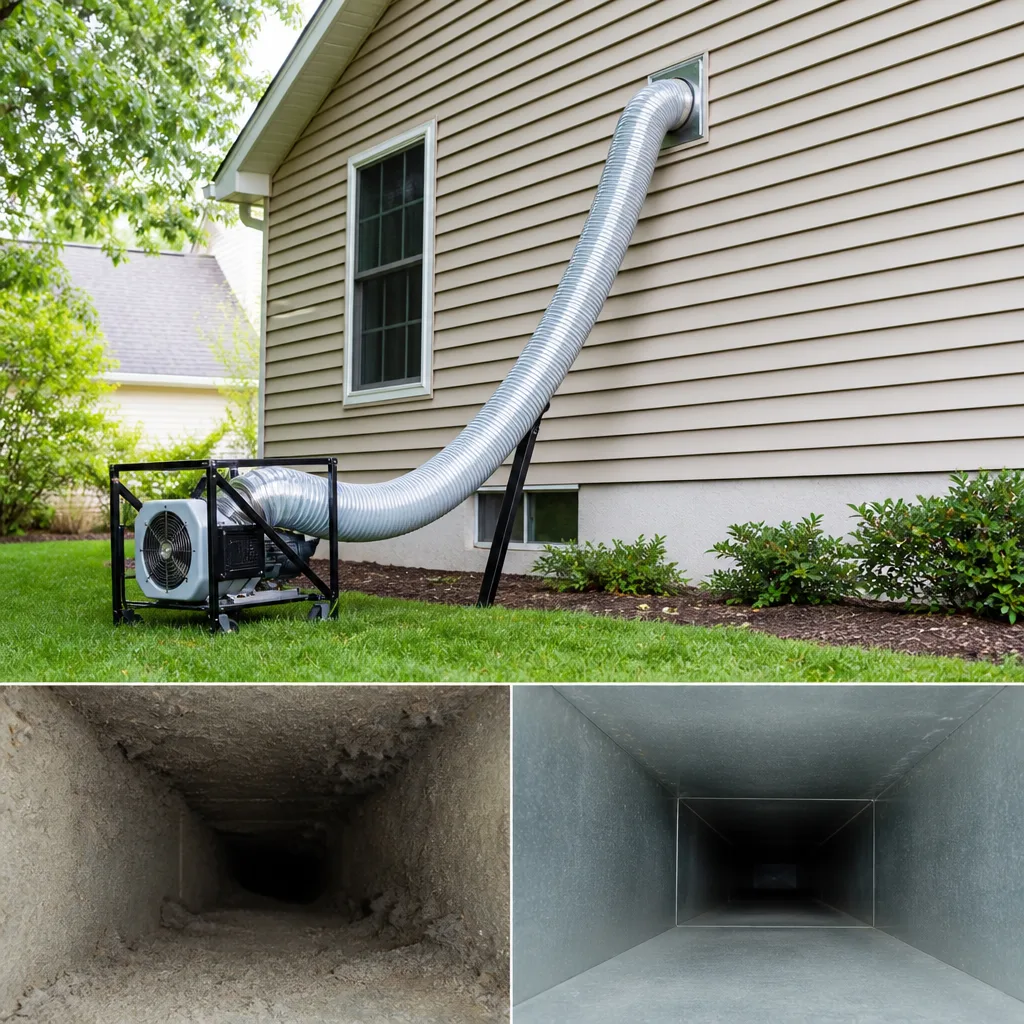 Whole-home duct cleaning
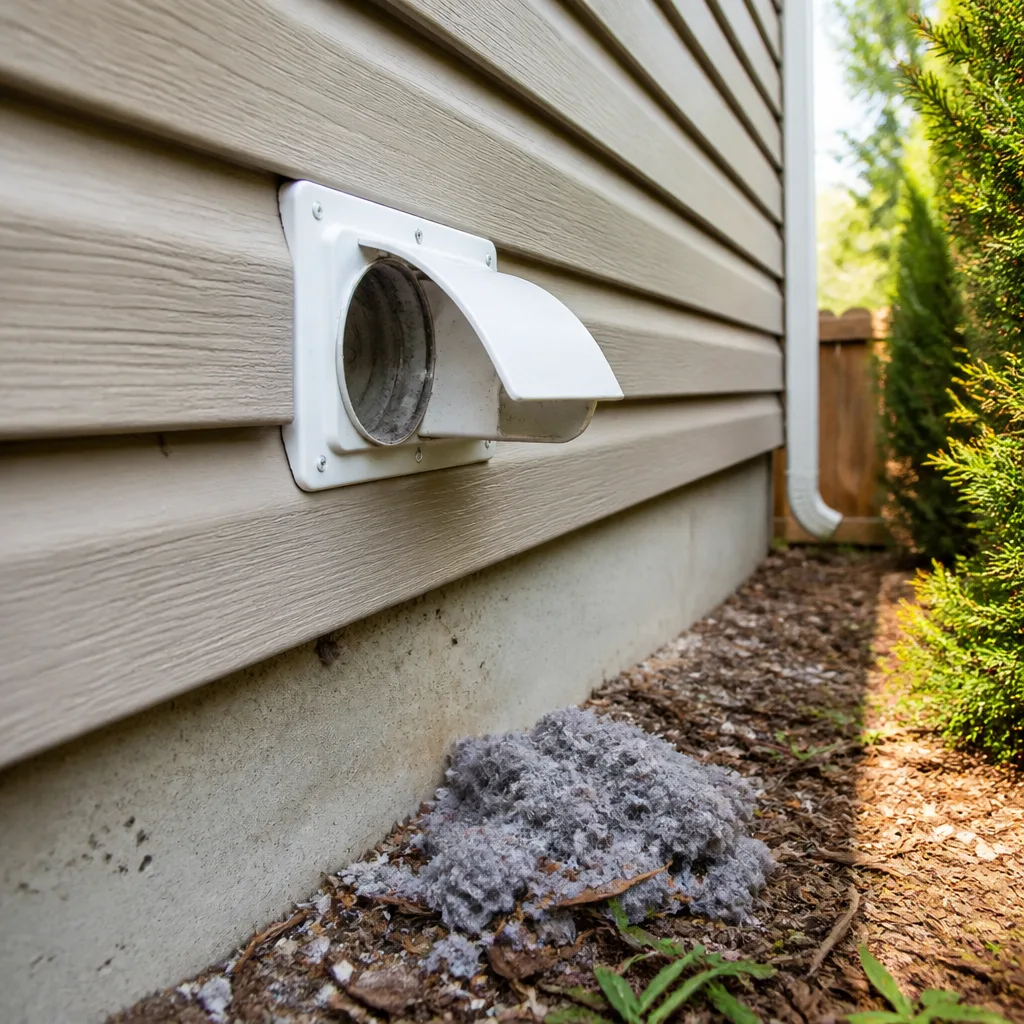 Dryer vent cleaning
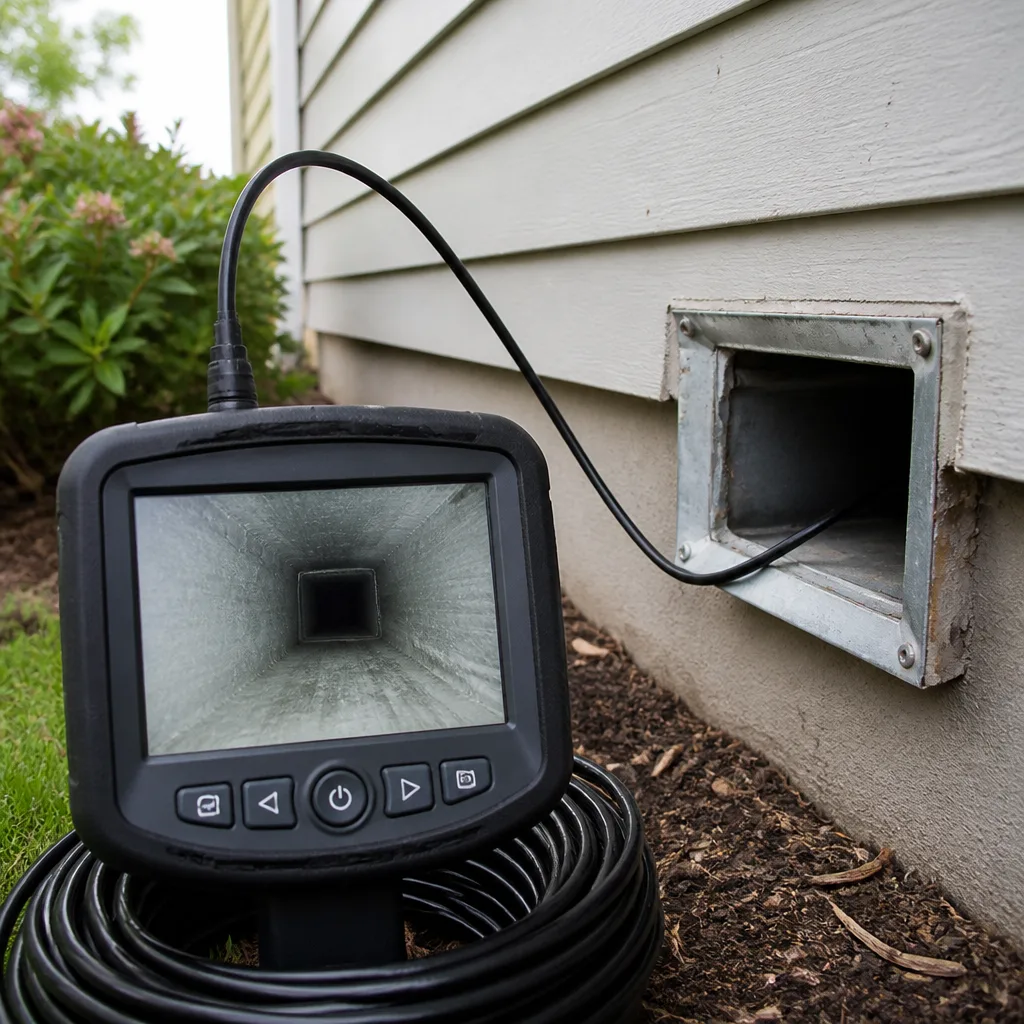 Camera inspection
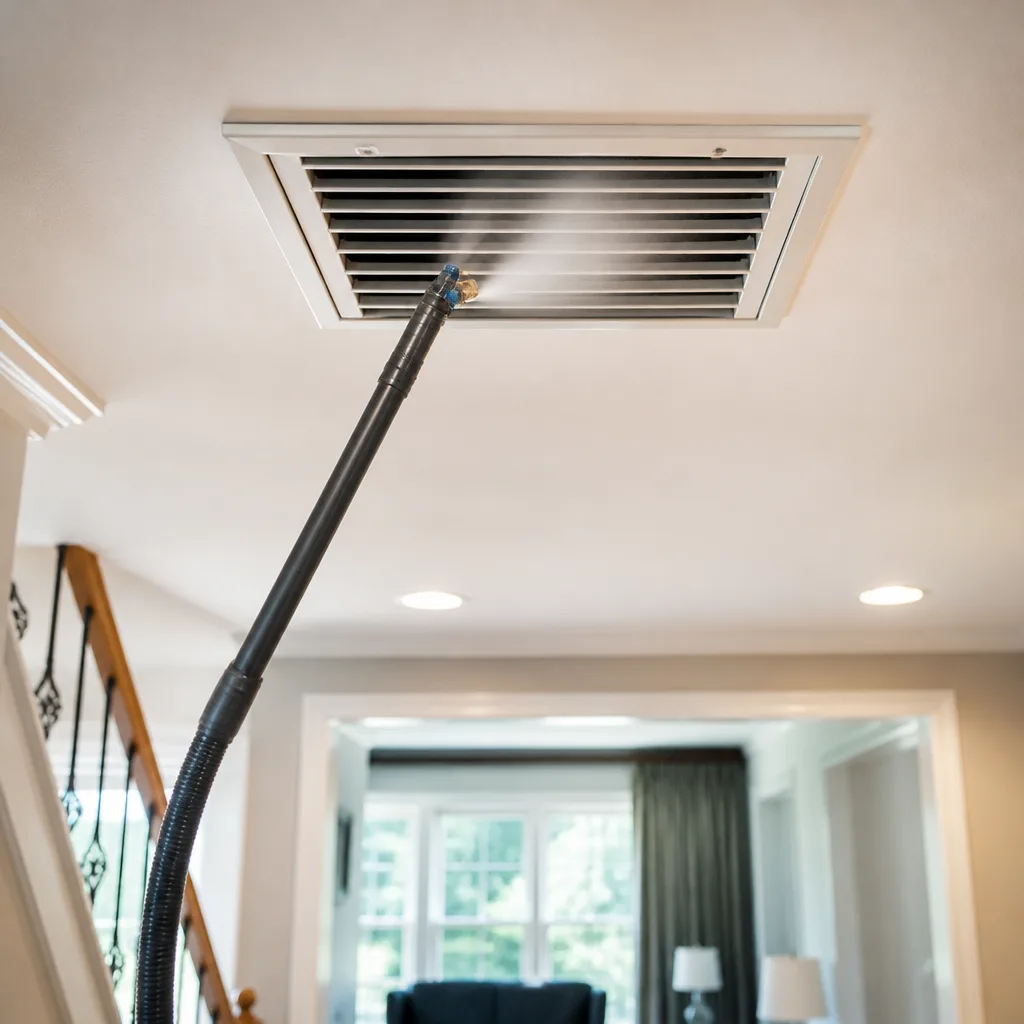 Sanitizing & deodorizing
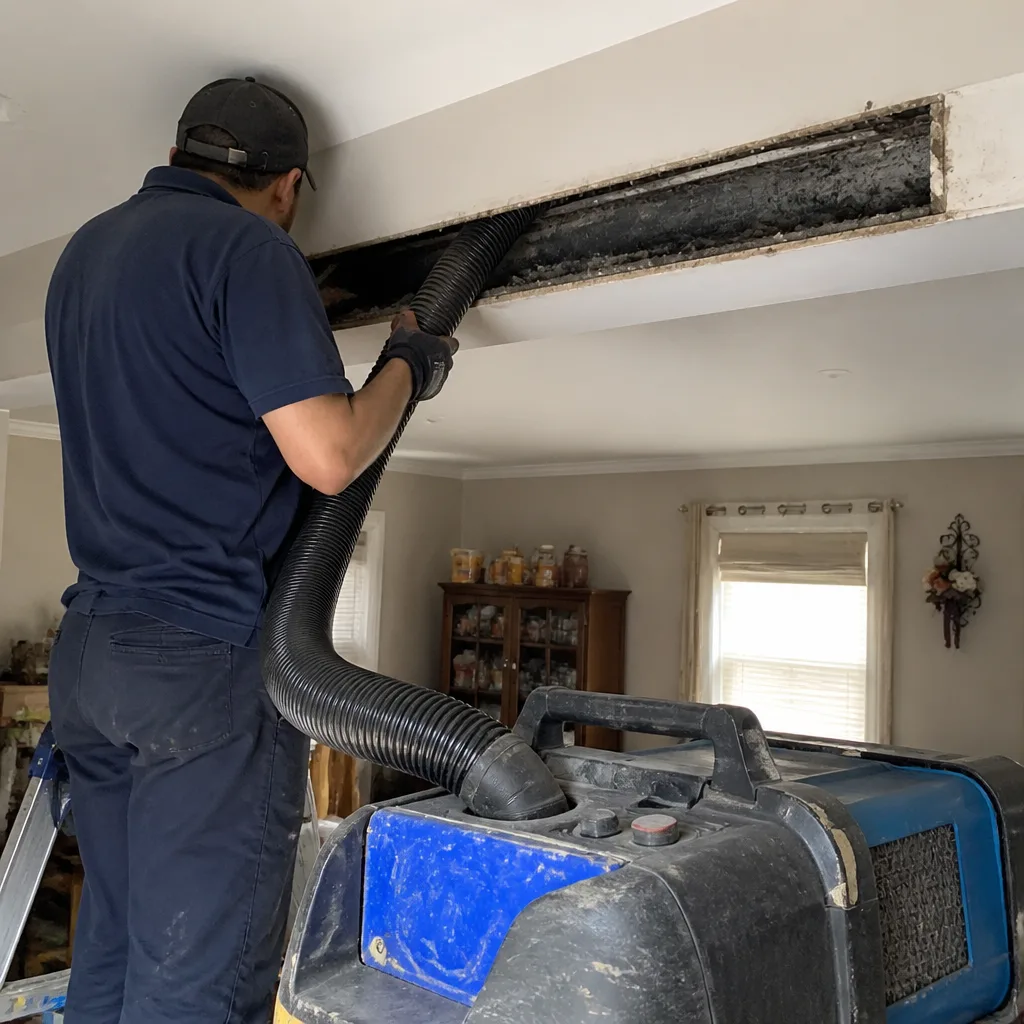
Whole-system duct and dryer vent check with before-and-after photos - you see exactly what came out of your vents
That "$99 whole-house special" is a bait ad - the real number appears once they are in your hallway, or the "clean" is a shop-vac at the register. We photograph the inside of your ducts before and after instead.
Air Duct Cleaning Warning Signs: A Frankford Homeowner’s Reference Guide
Most duct problems don’t announce themselves. They arrive as small, easy-to-explain symptoms you blame on something else: a dry throat in the morning, a bedroom that never warms up, a faint smell you figure is the basement. Months pass while the real cause keeps running behind the walls. By the time the picture is clear, a restricted system has been working harder than it should for a long time, and your PECO bill is the last place you notice it. What follows is a reference guide to reading those signals accurately, one built around the way homes in Frankford actually behave.
Quick Answer
The warning signs of dirty or damaged air ducts are a musty or earthy smell from the registers, uneven airflow room to room, visible dust streaks around supply vents, a system that short-cycles, and rising energy bills with no other explanation. In Frankford, older homes with original flexible duct runs are the most likely to show several of these at once. Two or more signs together means it’s time to have the system inspected.
Styles & brands we work with
- Whole-home duct cleaning
- Dryer vent cleaning
- Camera inspection
- Sanitizing & deodorizing
Table of Contents
- What Your Ducts Are Telling You Through Smell
- How to Test Airflow Room by Room
- What the Dust Around Your Registers Really Means
- Short-Cycling and Hidden Airflow Restrictions
- Why Frankford Housing Stock Changes the Picture
- Signs That Show Up in Fall and Spring
- The Dryer Vent Sign Almost Everyone Misses
- Understanding What Nobody Cleans and Why It Matters
What Your Ducts Are Telling You Through Smell
The nose is the cheapest diagnostic tool you own, and it’s also the one most people dismiss. Before you call anyone, work out which kind of smell you’re actually dealing with. The distinction changes the whole response.
A dirty-duct smell is musty and stale. It’s the smell of old paper and settled dust, and it tends to be strongest when the system first kicks on after sitting idle, or when you open the door to a room that’s been closed a while. This is the smell of accumulated dust, skin cells, pet dander, and fine drywall particles that have built up on the inside walls of the ductwork. A full-system clean with contractor-grade extraction is what resolves it.
A mold-in-duct smell is sharp and earthy. It’s the smell of a wet basement or a forgotten towel. That difference matters because mold growth means there’s moisture somewhere in the system, and cleaning alone won’t fix a moisture problem. It needs to be found first. Neg-air containment equipment and a sanitizing step come into play only after the source is identified.
- Musty and stale:
- Sharp and earthy:
- Chemical or burning:
- Smells only in some rooms:
If the smell sharpens in damp weather, that’s another clue pointing toward moisture. If it changes from room to room, the problem is localized. Either way, the response starts with diagnosis, not with a cleaning coupon. When you’re ready, our air duct cleaning service begins with an assessment of what’s actually in the system before any equipment goes in.
How to Test Airflow Room by Room
Airflow asymmetry is the most reliable early warning sign, and you can measure it with a tissue and a timer. Most homeowners never do this. They feel a register, think “seems fine,” and move on. A ten-minute test across the whole house tells you far more.
This is a comparison, not a measurement. You don’t need any special tools. You’re looking for relative differences between rooms, not absolute airflow numbers. Here’s the method:
- Turn the system to fan-only mode so the blower runs continuously without heating or cooling.
- Hold a single-ply tissue over the supply register in a room you know is comfortable. It should flutter strongly and steady. Note the strength.
- Repeat in every supply register on the same floor. Use the same tissue and the same hold.
- Time how long the tissue takes to be pulled against the grille in each room. A run with noticeably weaker pull is a suspect.
- Find the return registers and repeat. If the returns feel weak, air is being starved back to the unit, which affects every supply in the house.
- Write down the results room by room. Now you have a map of the system’s real behavior, not just a one-off impression.
The pattern tells you a lot. One weak register on an otherwise strong floor is usually one collapsed or disconnected flex duct run. Weak supply on an entire floor points to a blocked branch. Weak returns throughout the house point to restricted flow at the blower or a clogged filter housing. None of this is a substitute for a professional inspection, but it gives the technician a map that shortens the job considerably.
What the Dust Around Your Registers Really Means
Dust around a supply register is normal. Dust streaks radiating outward from one register, when the neighboring registers are clean, are not. That difference is the distinction between settling and active blowout, and it’s one of the most reliable visual signs a homeowner can spot without equipment.
Ordinary settling is even. A fine uniform layer builds up on the grille face and along the top of the register housing. That’s just the air in the room dropping particles, and it’s no more meaningful than dust on a bookshelf.
Active blowout looks different. You’ll see streaks that radiate outward from the grille louvres, or a dark ring that builds faster on one register than the others in the house. That pattern means the system is pushing dust through the joints or through a compromised lining at that specific point, not just depositing it in the room.
- Settling: fine, even layer across every register. Ordinary and not a duct problem.
- Blowout: one register with a heavier, streakier deposit than its neighbors. Worth attention.
- Fiber specks on the grille face: eroded duct lining. That’s material from inside the duct, not dust from the room.
- Dark soot-like deposits: worth having the furnace combustion checked alongside the ducts.
If the deposits at a register include small fibrous pieces, that’s a signal the lining itself is shedding. Cleaning helps, but sealing the compromised run is what ends the problem. That’s why our duct repair & sealing work goes hand in hand with cleaning in older homes where the lining has aged.
Short-Cycling and Hidden Airflow Restrictions
Short-cycling is when the system repeatedly starts and stops before completing a full heating or cooling cycle. Most homeowners and even some technicians will chase it back to a refrigerant charge issue or a failing control board. In our experience, restricted airflow from debris buildup or a collapsed run is a common cause that gets overlooked entirely.
Here’s the mechanism. The blower pushes air across the evaporator coil. If dust has loaded the coil or debris is choking the ductwork upstream of it, the coil doesn’t get enough warm return air across it. It gets cold enough to form ice. The system reads that as a fault, shuts down, the ice melts, and the cycle starts again. A service call that only checks refrigerant will often come up wrong when the real culprit is airflow.
Several things can short-cycle a system. Here’s how to tell them apart before calling for service:
- Listen for the pattern. Repeated start-stop on a regular rhythm points at airflow or control faults, not a refrigerant leak.
- Check the filter. A clogged filter is the most common restriction and the easiest to rule out.
- Check the outdoor unit for fan cycling. If it shuts off before the indoor blower does, the issue is often electrical or refrigerant, not ductwork.
- Look for a frozen line set or coil. If ice appears, restricted airflow is a strong suspect.
- Schedule an airflow inspection alongside the HVAC service. Ask the technician to measure static pressure, which reveals whether the ductwork itself is the bottleneck.
If short-cycling shows up on your PECO bill as a spike in the coldest weeks, airflow is worth checking before you assume the system needs replacement. Nikro HVAC cleaning equipment and static pressure readings together tell you the truth about a restriction.
Why Frankford Housing Stock Changes the Picture
The same symptom means different things depending on the home. A dusty register in a house built in the last decade is nearly always a settling issue. The same dust in a home built between 1960 and 1980 is more often the original ductwork itself, because those installs used materials and joint techniques that don’t hold up the way modern hard pipe does.
The specific clues on an older Frankford home:
- Original flexible duct runs behind the walls. Flex duct collapses or tears at the fittings, and the loss of airflow happens quietly.
- Slab-on-grade with ductwork running under the slab. Those runs are notoriously prone to joint separation and moisture infusion, and they’re easy to forget because you never see them.
- Additions and enclosed porches where ductwork was extended. Extended runs often lose pressure to the original layout, so the addition is always the weakest room.
- Wall returns rather than floor returns. Wall returns pull from a specific height and can miss the dustiest part of the room, which means the system serves the same air twice.
- Post-renovation dust. Any home that’s had an addition, a kitchen, or a bathroom done in the last three years is a prime candidate for construction dust still settled in the system.
Newer homes have their own tells. In an efficient new build, a short-cycling system and a suddenly high bill are less likely to be insulation and more likely to be a duct damper that’s been left closed after commissioning, or a run that was never sealed at the boot. The signs are the same; the cause is different. Understanding your home’s vintage tells you where to look first.
Signs That Show Up in Fall and Spring
Duct problems reveal themselves in transition weather. Frankford swings from humid summer to dry winter, and the system’s behavior changes with it. Watch for these seasonal signals.
In the fall, the first heat call after a long idle period is the moment a musty smell announces itself. That’s the settled dust in the supply ductwork being pushed out into rooms that have been closed up all summer. If the smell fades within a day, it’s mostly surface dust. If it keeps coming back every time the system runs, the supply side is loaded.
In the spring, the first cooling call brings condensation. A system with restricted airflow is slower to pull humidity out of the air, and rooms feel clammy even though the thermostat reads correctly. Restricted airflow means the evaporator coil isn’t getting enough air across it, and dehumidification suffers. If your cooling feels weak but isn’t broken, airflow is worth checking.
Winter is the season when a collapsed flex run can push a teenager’s bedroom into a cold spot that the rest of the house never notices. Spring is when the dust starts appearing in sunbeams. Both are the ductwork working behind the scenes, and both are the same underlying issue observed from different seasons.
The Dryer Vent Sign Almost Everyone Misses
There’s one warning sign that has nothing to do with the air you breathe and everything to do with the load of laundry sitting in the dryer. Dryer clothes taking two cycles instead of one, or a dryer that gets hot on the outside during a run, points to a restricted vent. It’s an airflow problem, and it carries a fire risk.
Most duct cleaning companies treat dryer vents as a separate service, if they handle them at all. We include them in the same work because the principle is identical: the lint in a dryer vent responds to the same extraction equipment as the dust in a supply run, and a homeowner who ignores the dryer vent while fixing the ducts is leaving the highest-stakes airflow problem behind.
Signs to watch for:
- Clothes take longer to dry than they used to. A full cycle that used to finish in one now takes one and a half.
- The dryer’s exterior is noticeably warm or hot to the touch during a run.
- The lint screen fills faster than usual, or the outdoor vent flap barely moves when the dryer is running.
- A burning or scorched smell anywhere near the dryer, which should stop the machine until the vent is checked.
Our dryer vent cleaning uses the same contractor-grade extraction that we bring to ductwork. In a home with a long or bending vent run, lint can build up faster than the homeowner realizes, and it’s the type of buildup that warrants a check every once in a while, not just when the machine’s efficiency drops.
Understanding What Nobody Cleans and Why It Matters
Most air duct cleaning services address the ducts themselves and stop there. The HVAC unit, the return plenum, the coil, and the supply boots are left alone. That’s a problem, because the dust that settles in the ducts originated somewhere, and the coil is usually the largest single source of debris in the system.
A full-system clean touches everything in the air path: the return registers, the return trunk, the blower compartment, the evaporator coil, the supply plenum, and the supplies themselves. In our work, we bring Rotobrush rotary brush systems for the duct interiors and Nikro HVAC cleaning units for the unit-side work, plus Abatement Technologies negative-air equipment to keep the dislodged particulate from settling back into the living space. That’s contractor-level dust containment, and it’s what distinguishes a system clean from a surface pass.
For air quality upgrades, we integrate Honeywell and Aprilaire components after a clean, so the home gets filtration and humidity control calibrated to what the clean system can actually deliver. The order matters: clean it, seal it, then upgrade. Upgrading filtration on a duct system that’s still shedding debris is money spent in the wrong order.
Common Mistakes to Avoid
- Blame the insulation before the ductwork. A high winter bill gets blamed on insulation in most Frankford homes before anyone thinks to have the ducts checked. A partially blocked run can force the blower to work well beyond its rated load, and that shows up on the bill long before you’d ever see it.
- Assume a new filter fixes it. A filter change is worth doing, but it only addresses return-side restriction. Supply-side debris, a collapsed flex run, or a separated boot will keep causing symptoms with a brand-new filter in place.
- Treat a moldy smell like a dust smell. The smell distinction matters. Cleaning the ducts without finding the moisture source means the problem returns, usually within weeks.
- Skip the dryer vent because it didn’t come up. The dryer vent is often the highest-risk airflow problem in the house, and it’s rarely part of a “duct cleaning” quote unless you ask.
- Judge the system by one register. The single closest supply often feels strong while the weak run is in a spare bedroom or addition. Check the whole floor.
- Wait for a visible sign. Blowout dust patterns and fiber specks are late-stage signs. Airflow testing catches the problem earlier.
- Pick the lowest coupon quote and expect a full-system result. A coupon-driven visit is usually a quick pass on the supplies, not a full-system clean. Ask before booking what equipment will be used and what the scope touches.
See the difference
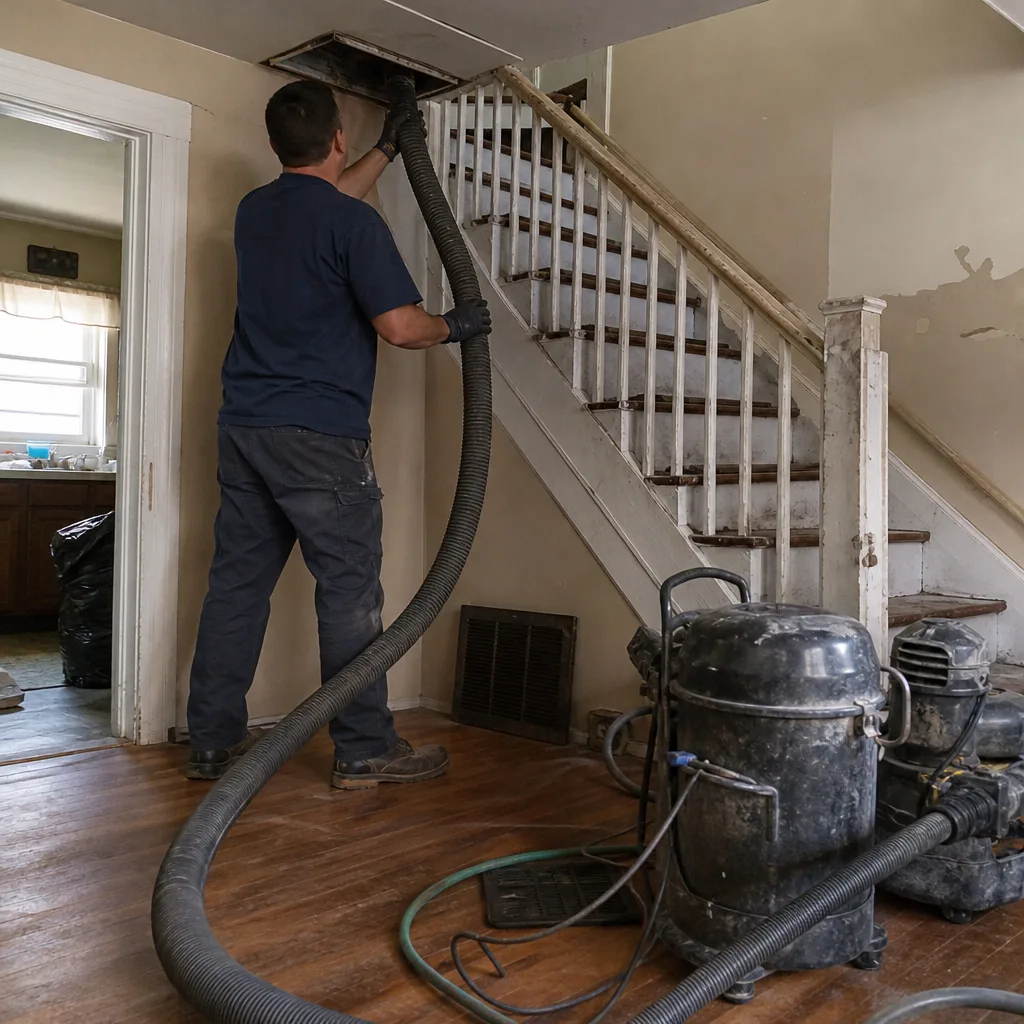 Before
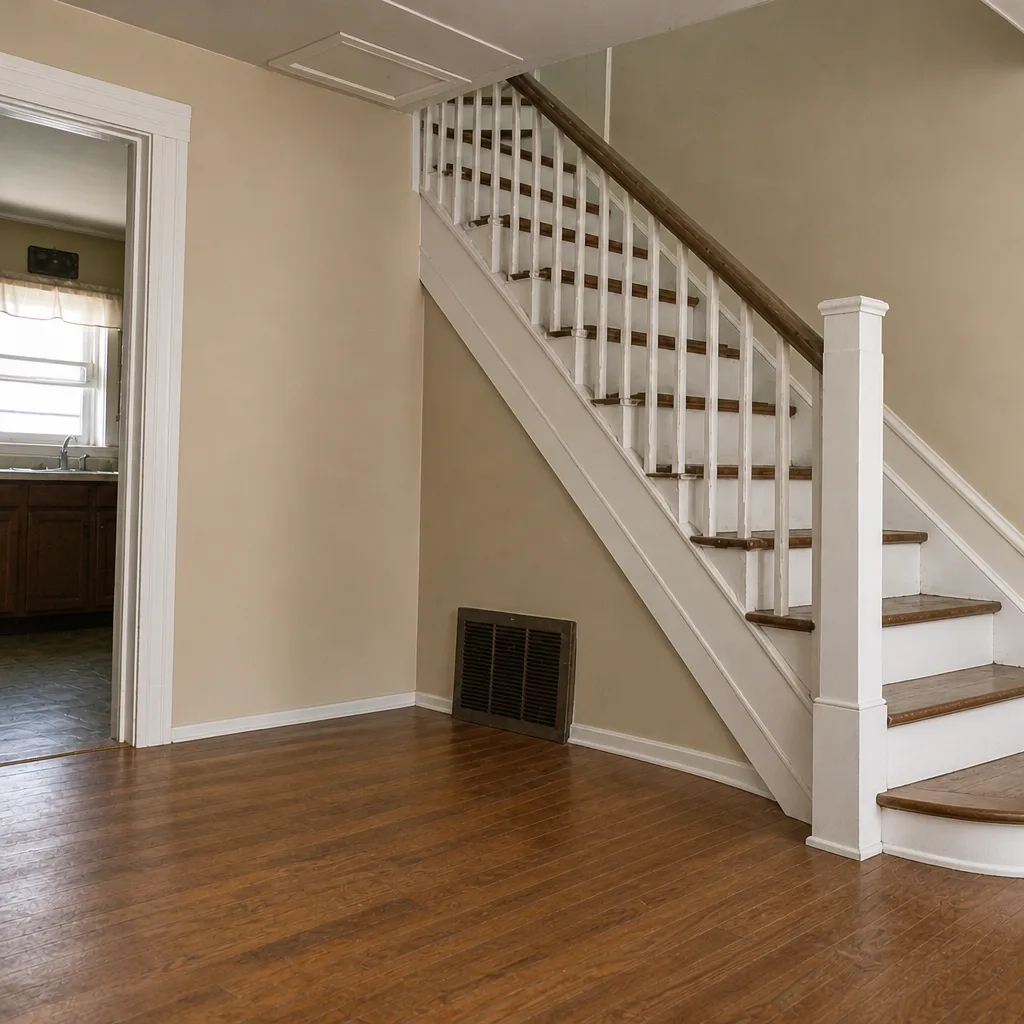 After
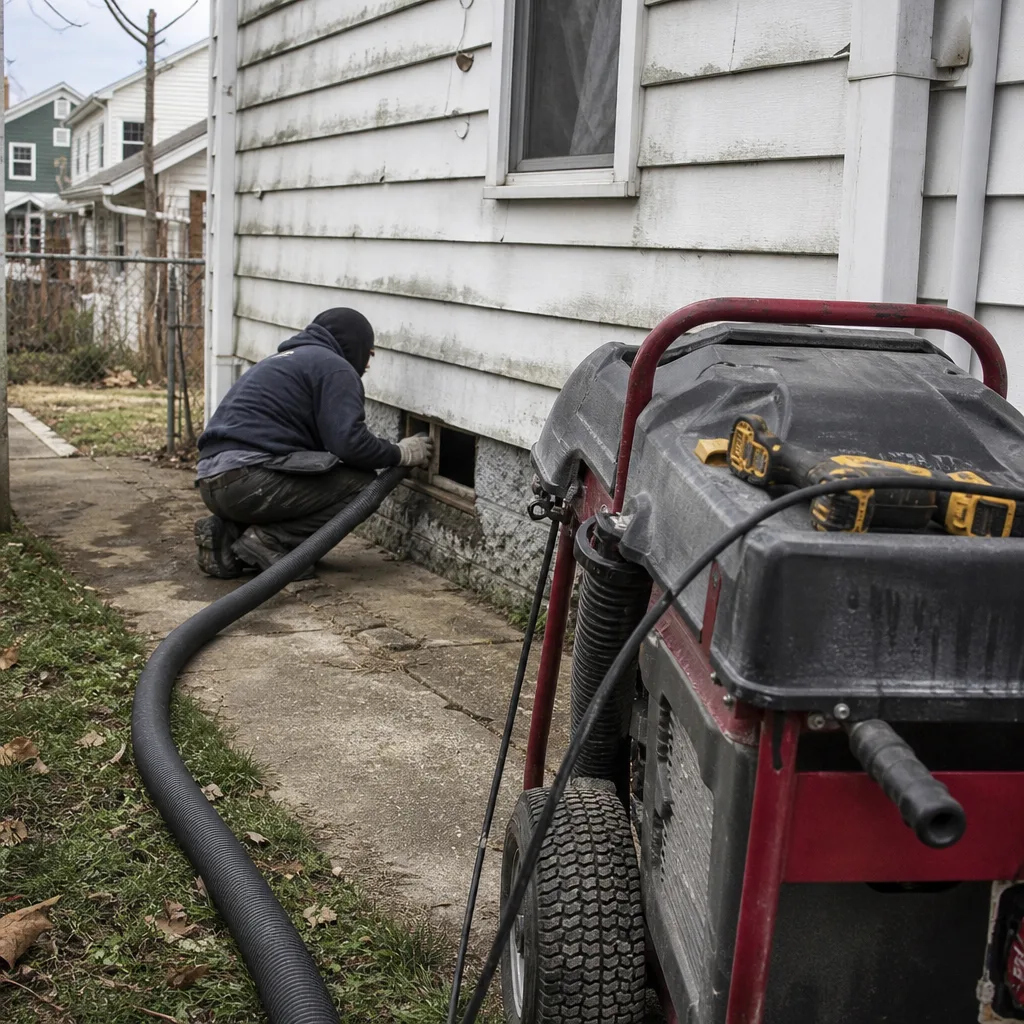 Before
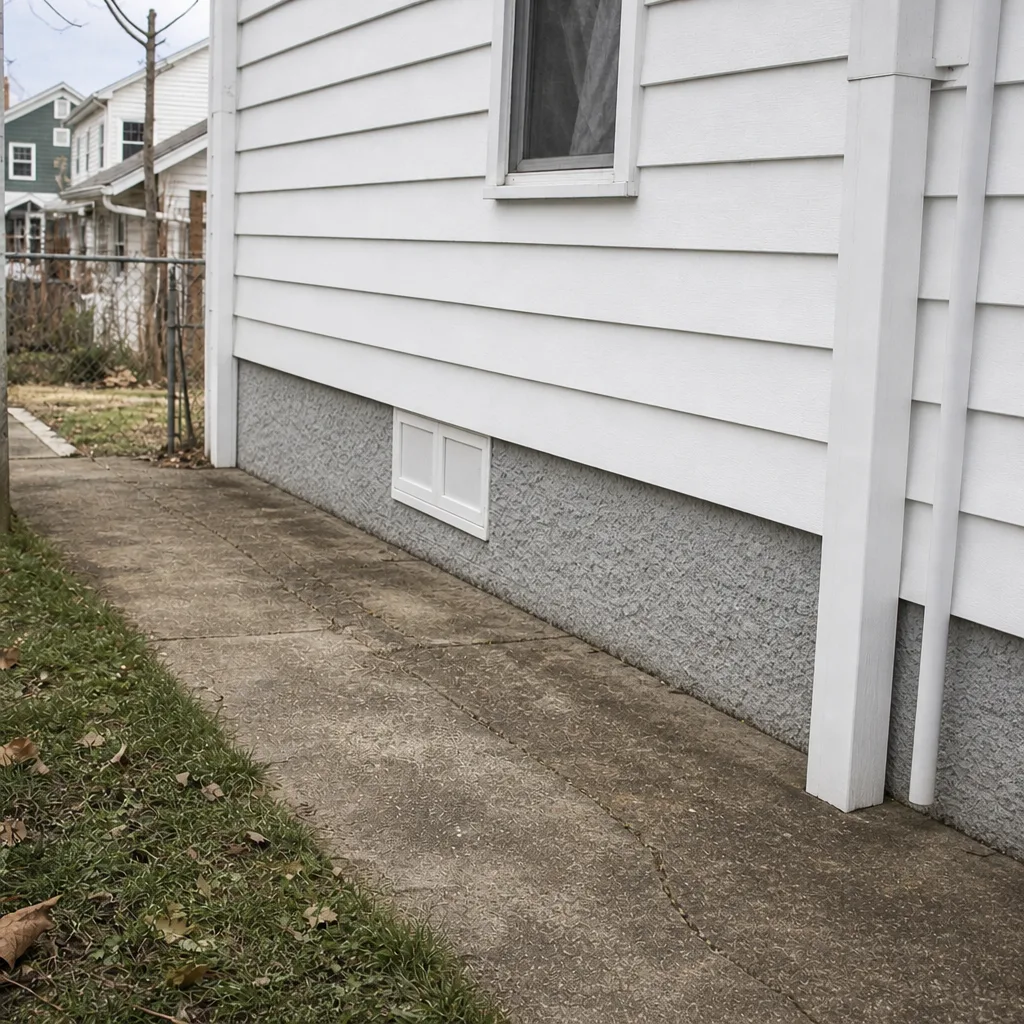 After
 Before
 After
When to Call a Professional
Some signs are quick checks you can do yourself. Airflow testing, filter inspection, and smell identification all belong in the homeowner’s hands. Others belong with a trained technician. If you see fiber specks on a register, a musty smell that returns every time the system runs, short-cycling combined with a rising bill, or a dryer that’s taking longer and running hotter than it used to, that’s the point where a professional inspection pays for itself. The same applies to any home that’s just finished a renovation or just had a system installed. Air Duct Cleaning Frankford offers free estimates in Frankford, and our technicians have up to 10 years of experience reading the signs behind the walls. Call (866) 690-7933 to book an assessment. We answer 24/7, with fast dispatch from 7am to 7pm, Sunday through Friday.
Frequently Asked Questions
The clearest signs are a musty smell from the registers, uneven airflow room to room, visible dust streaks on one register but not its neighbors, and a system that short-cycles. Two or more of these at once is the practical threshold for a professional inspection. Call (866) 690-7933 for an exact quote on a full-system assessment. The estimate is free.
A full-system clean fixes musty, stale smells caused by settled dust, and it doesn’t fix sharp earthy smells that trace to moisture in the system. Those need the moisture source found first. If your smell has changed character or returned soon after a previous cleaning, that pattern alone is worth a call. Call (866) 690-7933 to book an inspection. Estimates are free.
Yes. A tissue and a timer are all you need. Run the fan in continuous mode, hold the same tissue over each supply register on the same floor, and time the strength of pull in each room. The weakest register or floor tells you where the problem likely is. Call (866) 690-7933 with your results and we can tell you what to check next. Estimates are free.
A restricted air duct run is a common cause that gets overlooked when the insulation and windows look fine. When airflow is blocked, the blower works harder to move the same air, and the system runs longer cycles to satisfy the thermostat. It’s worth having the airflow checked before replacing insulation or equipment. Call (866) 690-7933 for a free estimate. The written estimate sets the final price once the scope is known.
Not everywhere, but it should be treated as part of the same airflow system. A restricted dryer vent causes longer drying cycles and higher operating temperatures, and it’s one of the more predictable fire risks in a laundry. We handle it alongside the ductwork with the same extraction equipment. Call (866) 690-7933 for a free estimate on the full scope.
There’s no single answer for every home. Homes with pets, recent renovations, allergy concerns, or original ductwork from an older build typically need it sooner than a newer home with no specific symptoms. The signs in this guide are a better trigger than the calendar. If you’re seeing two or more of them, call (866) 690-7933. Estimates are free.
The Bottom Line
Duct problems are quiet. The smell, the uneven airflow, the dust pattern on one register, the short-cycling, the bill that crept up without explanation. Each one is easy to rationalize away for a few months, and together they tell a clear story about what’s running behind your walls. In Frankford, older housing stock adds its own layer to that story, and the homeowner who learns to read the signs catches the problem early. When you’re ready to move from symptom to diagnosis, our Air Duct Cleaning Frankford team brings professional-grade equipment and a full-system approach to every assessment.
Call (866) 690-7933. We answer 24/7. Fast dispatch from 7am to 7pm, Sunday through Friday. The estimate is free.
Written by the team at Air Duct Cleaning Frankford.