
Last updated November 22, 2026
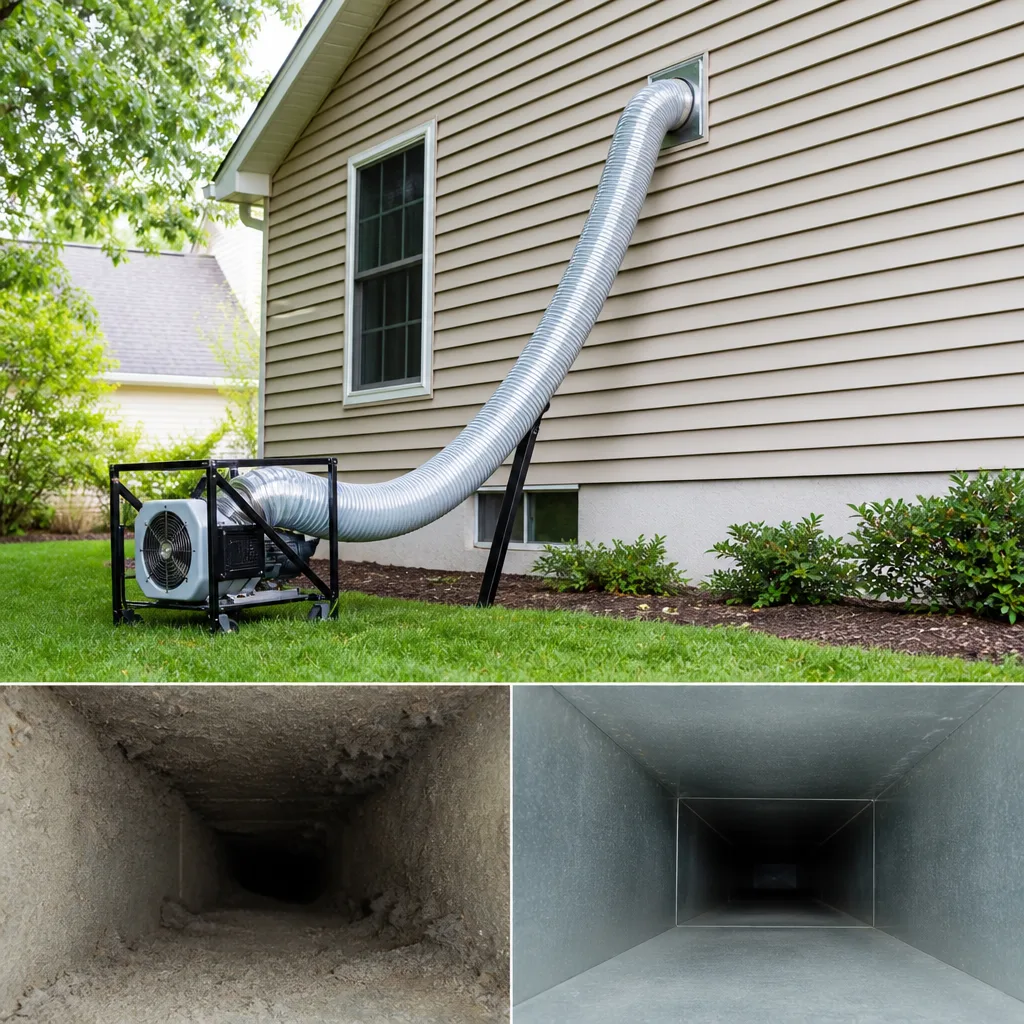 Whole-home duct cleaning
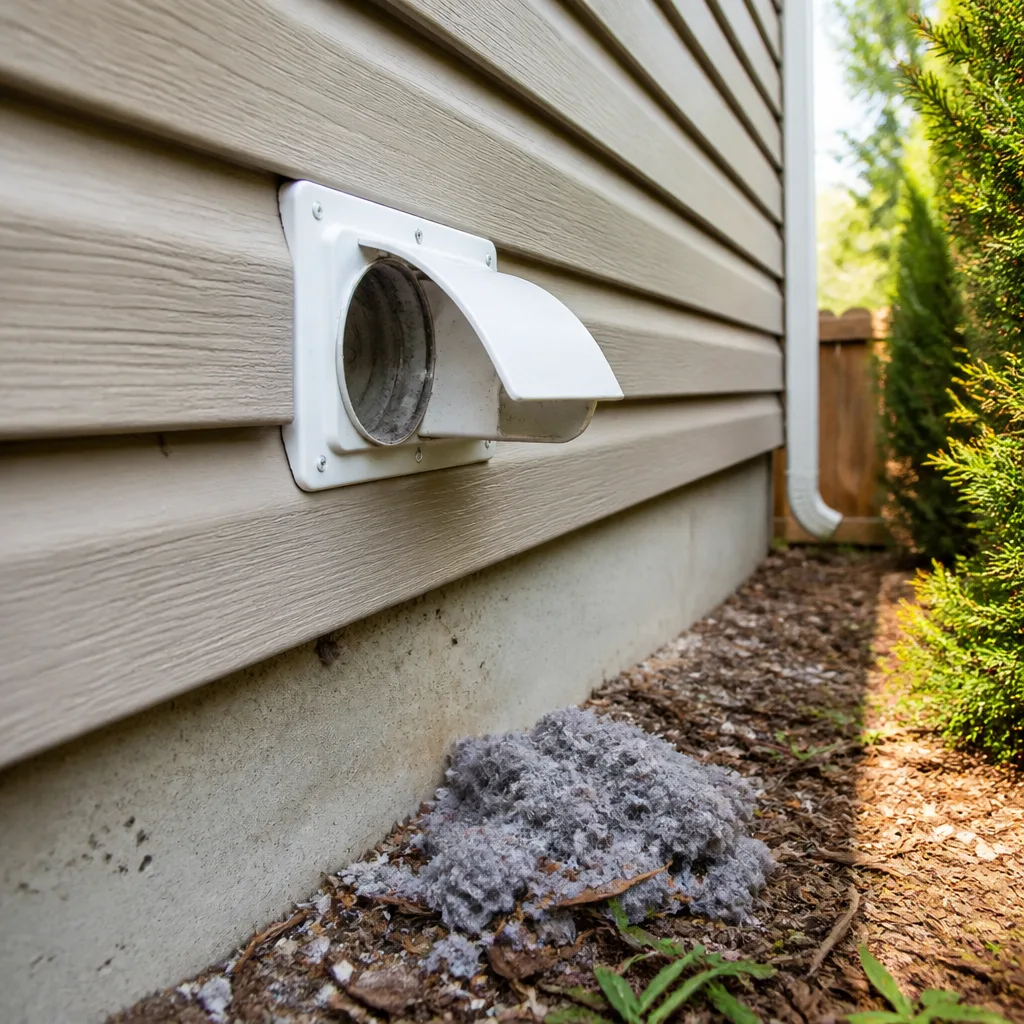 Dryer vent cleaning
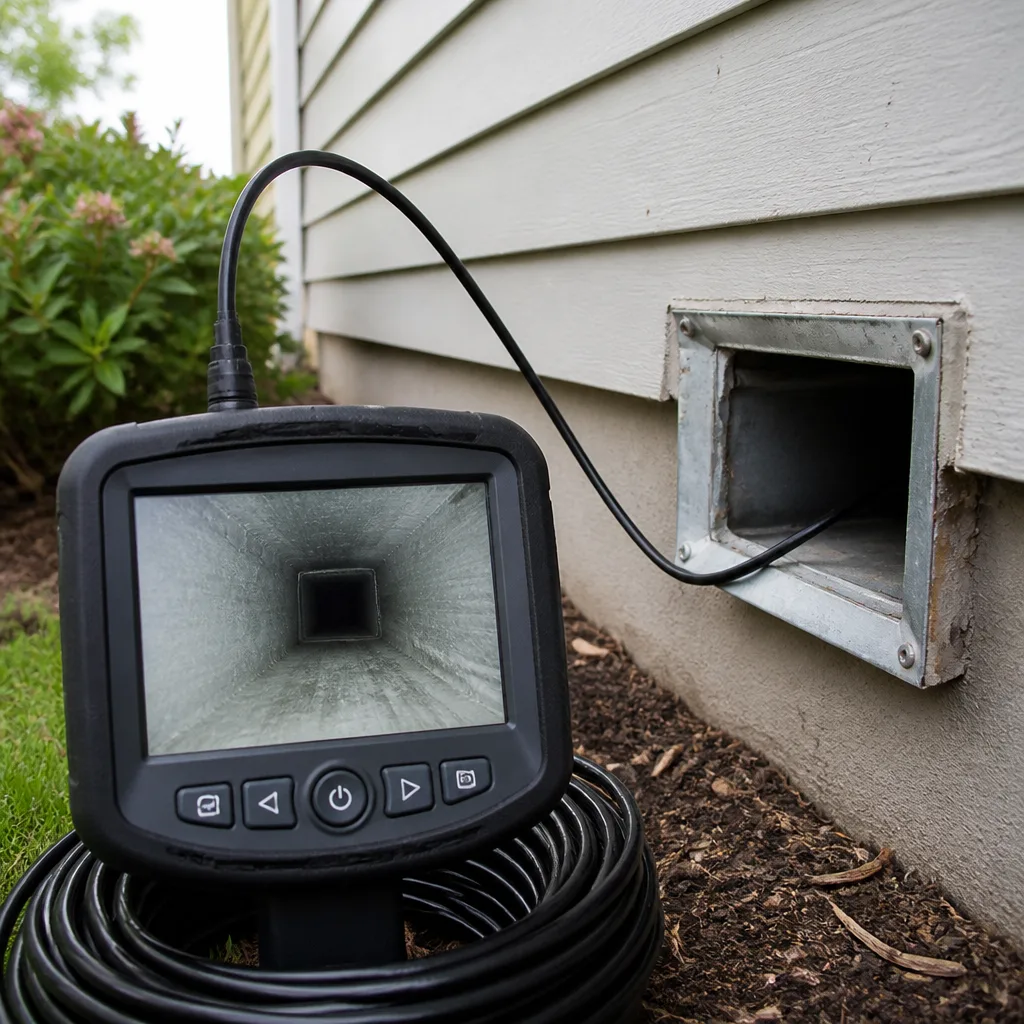 Camera inspection
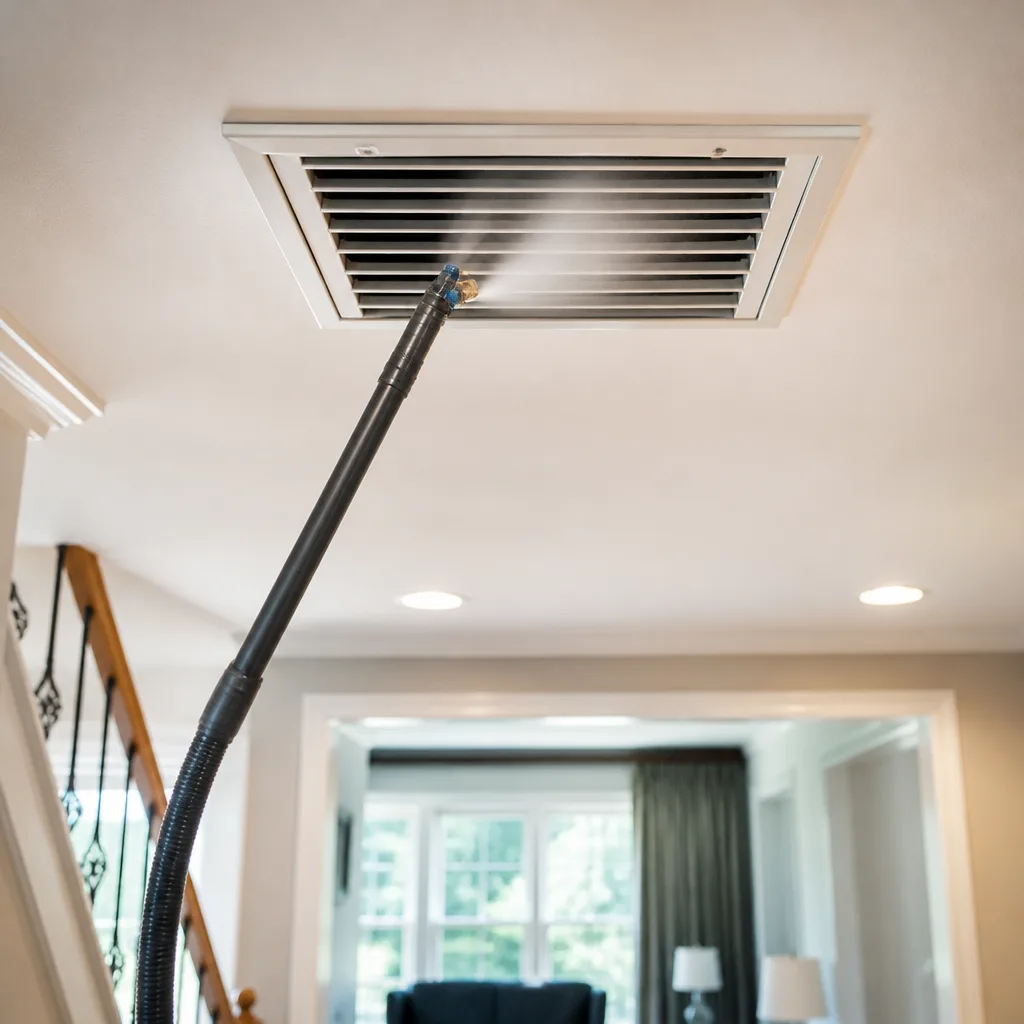 Sanitizing & deodorizing
Whole-system duct and dryer vent check with before-and-after photos - you see exactly what came out of your vents
That "$99 whole-house special" is a bait ad - the real number appears once they are in your hallway, or the "clean" is a shop-vac at the register. We photograph the inside of your ducts before and after instead.
DIY vs Professional Air Duct Cleaning: The Frankford Homeowner’s Decision Guide
Here’s the part most guides skip: a shop vac taped to a dryer brush creates positive pressure as often as it creates suction. That means you can knock debris off the duct wall and push it into your living room instead of pulling it out of the system. This isn’t about whether you’re handy enough. It’s about whether your equipment can hold a pressure differential across a twenty-foot duct run, and most consumer tools can’t. What follows is a frank look at what DIY actually accomplishes in a Frankford home, what a contractor-grade system does differently, and how to tell the two apart before anyone knocks on your door.
Quick Answer
DIY air duct cleaning is maintenance, not cleaning. It can handle register boots, filter housings, and visual checks, but it can’t generate the negative pressure and airflow that removes settled debris from long duct runs. Professional cleaning with contractor-grade extraction is the only approach that dislodges and captures debris across the whole system. In Frankford’s older housing stock, with its mix of short and long runs and decades of accumulated dust, the distinction matters more than it does in newer construction.
Styles & brands we work with
- Whole-home duct cleaning
- Dryer vent cleaning
- Camera inspection
- Sanitizing & deodorizing
Table of Contents
- The Physics of Duct Cleaning: Why Airflow Direction Decides the Outcome
- What You Can Legitimately Accomplish Yourself
- Equipment Specs That Separate Contractor Systems from Rental Tools
- When DIY Prep Before a Professional Visit Pays Off
- How to Tell If a Pro Is Actually Bringing Professional Equipment
- Why Frankford Homes Need a Full-System Look
- Common Mistakes to Avoid
- When to Call a Professional
The Physics of Duct Cleaning: Why Airflow Direction Decides the Outcome
Duct cleaning isn’t scrubbing. It’s a controlled contest between the debris sitting on your duct walls and whatever force is trying to move it. Three factors determine who wins: negative pressure, airflow velocity, and the geometry of the run itself.
Negative pressure means the cleaning system pulls air toward itself from inside the duct, so loosened debris travels into the collection unit rather than into your rooms. A professional setup seals or accesses the system at strategic points and creates a pressure differential strong enough to keep dust moving in one direction while brushes and whips agitate the walls. The moment that pressure drops, debris stops traveling and starts settling in the nearest open space.
Airflow velocity matters too. Fine dust needs more velocity to stay airborne than it did to settle in the first place. Long runs, elbows, and flex duct all bleed velocity. That’s why a weak suction tool placed at a register can stir up dust back toward the room without ever lifting what’s further down the run.
Duct geometry compounds the problem. Frankford rowhouses and older single-family homes often have short, tightly routed trunks feeding a handful of registers, plus a few longer runs to far rooms. Dust collects unevenly. A tool that only reaches the first ten feet of a run will clean the easy section and leave the rest.
This is where contractor-grade equipment earns its place. Rotary brush systems like Rotobrush advance through the full run while agitating, and Nikro HVAC units provide the suction and collection behind them. Together they hold the pressure differential the whole way rather than losing it at the first elbow.
What You Can Legitimately Accomplish Yourself
You can do real, useful work with a vacuum, a screwdriver, and a flashlight. What you can’t do is clean the interior of a long duct run to the same standard a professional system reaches. Here’s an honest split.
What DIY handles well
- Register boot cleaning. The short section between the floor or wall vent and where the duct disappears into the wall is accessible. Remove the grille, vacuum the boot, and wipe it down.
- Filter housing and return plenum wiping. The area around the filter and the return grille collects a lot of visible dust. Wiping and vacuuming it here makes a difference to what the system pulls in next.
- Grille and diffuser washing. Soap, water, a brush. This is easy and worthwhile every few months.
- Visual inspection. A cheap USB or phone camera on a short flexible wand lets you look into the first few feet of a run and see what’s sitting there. That’s information a professional will appreciate.
- Filter changes. The single highest-return task in this category. A clogged filter strains every component downstream.
What DIY cannot reach
The interior surface of a full duct run is out of reach of any consumer tool. A shop vac’s suction collapses within a few feet of flexible or insulated duct, and the tools that would agitate a duct wall (rotary brushes, pneumatic whips) require volume and pressure a consumer unit can’t sustain. Attempting it often redistributes dust into the living space rather than removing it.
If you’re planning a deeper clean, it’s worth understanding what a full professional job involves before you start. The guide to air duct cleaning breaks down the process step by step, which is useful context for deciding whether DIY is the right starting point for your home in Frankford.
Equipment Specs That Separate Contractor Systems from Rental Tools
If you only take one section from this guide, make it this one. When a professional quote arrives, the equipment matters more than the price. Here’s what to compare.
Suction and airflow (CFM)
Contractor-grade extraction units are built to move a volume of air that consumer tools can’t match. Rental vacs and shop vacs are designed for surface debris, not sustained airflow through a duct system. Ask the company what extraction unit they use and whether it’s rated for the length of your longest run. A unit that’s undersized for a Frankford rowhouse with a long back-room run will leave debris behind no matter how long the technician works.
Agitation tools
- Rotary brush systems (such as Rotobrush) advance a spinning brush through the duct, contacting the walls and pulling debris into the airstream toward the extraction point.
- Pneumatic whips and skippers use compressed air to knock debris loose without a solid contact tool. Good for certain duct types, especially where a brush could damage the liner.
- Hand tools and simple vacuum wands reach only the accessible first section. If that’s all a quote describes, you’re paying for register boot cleaning.
Containment and filtration
This is the equipment tier most homeowners never ask about, and it’s the one that determines whether the job is contained. Negative-air machines, such as those from Abatement Technologies, hold the work area under negative pressure so that loosened contaminants are drawn into the collection system rather than drifting into occupied rooms. HEPA filtration on the vacuum exhaust does the same job at the exit point: what goes in doesn’t come back out as fine dust. A professional setup includes both. A vacuum with no HEPA filter and no containment is a source of the very particles it’s supposed to remove.
Sanitizing and post-clean products
Where a company offers air quality sanitizing, the products matter. Guardsman-grade sanitizing solutions are what we use when a home needs more than a mechanical clean, and Honeywell and Aprilaire components are available when a system could benefit from filtration or humidity upgrades after the cleaning is done. Ask what a company applies, and why.
When DIY Prep Before a Professional Visit Pays Off
There’s a narrow, useful window where doing a little work yourself before a professional arrives improves the outcome and can trim the scope. It doesn’t replace the clean. It makes the clean more effective.
Here’s the prep sequence that actually helps:
- Clear access to every register and return. Move furniture, rugs, and shelves away from vents. A technician who can reach all the registers without shifting a bookcase saves time and reaches more of the system.
- Remove and wash the grilles. They’re easy to take down and wash in a sink. Doing it yourself means the technician doesn’t have to.
- Change the filter beforehand. A clean filter means the system isn’t pulling dust from a clogged return while the technician works.
- Photograph anything you’re concerned about. A camera shot into a register showing visible dust or debris helps the technician target the right runs.
- Note which rooms seem dustiest and when. Pattern information here is useful. Consistently dusty rooms often trace to a specific run or a leaky joint, not the whole system.
- Check the dryer vent area. If the dryer vent line runs into a wall or ceiling space, note where it terminates. Dryer vent cleaning is a separate job from duct cleaning, and it’s worth scheduling both.
One more prep task worth doing: walk the basement or utility area where the HVAC unit sits and look for obvious gaps, disconnected flex duct, or joints that have pulled apart. If you find one, point it out. A disconnected run is a leak, and cleaning it before it’s reconnected wastes the effort. That’s where duct repair & sealing comes in, and it’s often the right next step after a clean rather than before.
How to Tell If a Pro Is Actually Bringing Professional Equipment
A quote can sound thorough and still describe a shop vac and a hose. The only reliable way to know is to ask specific questions and listen for specific answers. Any legitimate company will answer them plainly.
Ask these six questions before booking:
- What extraction unit do you use? The answer should name a contractor-grade unit. If the answer is “a high-powered vacuum,” ask for the make and model.
- What agitation tools do you bring? Rotary brush systems and pneumatic whips are the two real answers. Hand wands only reach the boot.
- Do you use negative-air containment? If the company can describe how they hold the work area under negative pressure, they run a professional setup. If they can’t, that’s your answer.
- Is the vacuum exhaust HEPA filtered? It should be. This determines whether fine dust stays in the machine or ends up back in the air.
- How do you handle sanitizing? The answer should include specifics: what product, and under what conditions it’s applied. Guardsman-grade sanitizing isn’t applied on every job; it’s applied when the situation calls for it. A company that can explain that distinction knows its work.
- Will you show me photos before and after? A professional will photograph register interiors, the plenum, and any problem areas. If a company won’t, don’t book.
The most revealing question is the one about containment, because it’s the piece that separates a surface clean from a controlled extraction job. It’s also the answer that reveals whether the crew is set up for a full-system clean or a quick pass. If you want to know what a full-system clean actually looks like across ducts, HVAC components, and dryer vents, the main Air Duct Cleaning Frankford page covers the scope.
Why Frankford Homes Need a Full-System Look
Frankford’s housing stock spans a wide range of construction eras, and that variety shows up in the duct systems. Older homes often have short, centrally located trunks with metal ductwork that’s seen decades of use, plus additions where a run was extended or rerouted to reach a rear room. Newer renovations in the area frequently mix rigid metal with flex duct, and flex duct collects dust differently. Its ridges trap debris, and its interior surface is harder to clean with anything other than low-pressure agitation.
The seasonal picture adds a layer. Frankford winters keep the heating system running for long stretches, which means return air is pulling household dust through the same filters and runs day after day. Summer cooling cycles shift the airflow pattern. Homes where the system runs nearly year-round accumulate dust faster than homes that get a long shoulder-season break.
Basements and utility spaces are part of the reason a whole-system view matters here. Ductwork in unconditioned spaces sees more temperature swing and more opportunity for joints to loosen. That’s where small leaks turn into bigger losses of efficiency and where a full-system clean, followed by sealing if needed, does more good than a register-only pass.
Two areas deserve calling out specifically:
- Dryer vent. Lint accumulation in a dryer vent line is a fire hazard, and it’s not something DIY vacuuming reaches past the first bend. A dryer vent cleaning is a separate, straightforward job, and it’s worth doing independently of the air duct clean.
- HVAC unit interior. The blower compartment and evaporator coil collect dust and can restrict airflow. Full-system HVAC cleaning is part of the picture, and skipping it means cleaning the ducts but leaving the source of some of the debris untouched.
We’ve seen enough Frankford systems to know that the register boot rarely tells the whole story. The dust you can see at the vent is often the smallest part of what’s in the run behind it.
Common Mistakes to Avoid
- Assuming a strong shop vac equals a duct cleaning. Suction force alone isn’t the point. Without sustained negative pressure and agitation, a shop vac stirs dust into the room. The equipment tier is what matters, not the noise level.
- Cleaning the registers and calling it done. Register boots are the visible 10% of the system. Cleaning them is worthwhile, but it isn’t cleaning the ducts, and it doesn’t touch the runs behind them.
- Booking on price alone. A very low quote usually describes a very small job. Ask what equipment arrives and what it does. If the answer doesn’t mention a rotary brush, a containment unit, or HEPA filtration, the price probably reflects a surface pass.
- Skipping the dryer vent. Lint in a dryer vent is a genuine fire risk, and it’s easy to forget when the main concern is the HVAC system. Treat it as part of the same service relationship, not an afterthought.
- Cleaning before sealing leaks. If a duct joint has separated or a run is disconnected, cleaning it first wastes the effort. Have the system checked for leaks, then clean and seal in the right order.
- Forgetting the HVAC unit itself. Cleaning the ducts while leaving a dusty blower compartment and coil behind means the system reintroduces debris. Full-system cleaning includes the unit.
- Not asking for before-and-after photos. A professional documents the work. Photos are how you verify that the job described is the job performed. If a company skips this, ask why.
When to Call a Professional
DIY makes sense for routine register cleaning, filter changes, and visual checks. It stops making sense when the problem is bigger than the accessible surface. The scenarios that call for a professional clean include:
- Visible dust or debris inside the registers, or a camera check showing buildup deeper in a run
- A recent renovation or remodeling project that left fine construction dust circulating
- Allergy or respiratory concerns that make indoor air quality a priority
- Moving into an older home with an unknown duct history, or a first deep clean in a long time
- Uneven airflow or noticeably dusty rooms that point to a specific run or a leak
- A dryer that’s taking longer to dry and a vent line that hasn’t been cleaned
When any of these describes your home, the right move is a professional assessment before you spend more time on the accessible parts. Air Duct Cleaning Frankford offers free estimates in Frankford – call (866) 690-7933. We answer 24/7, and fast dispatch from 7am to 7pm, Sunday through Friday. Our technicians have up to 10 years of experience and bring contractor-grade equipment, not rental-store vacuums.
See the difference
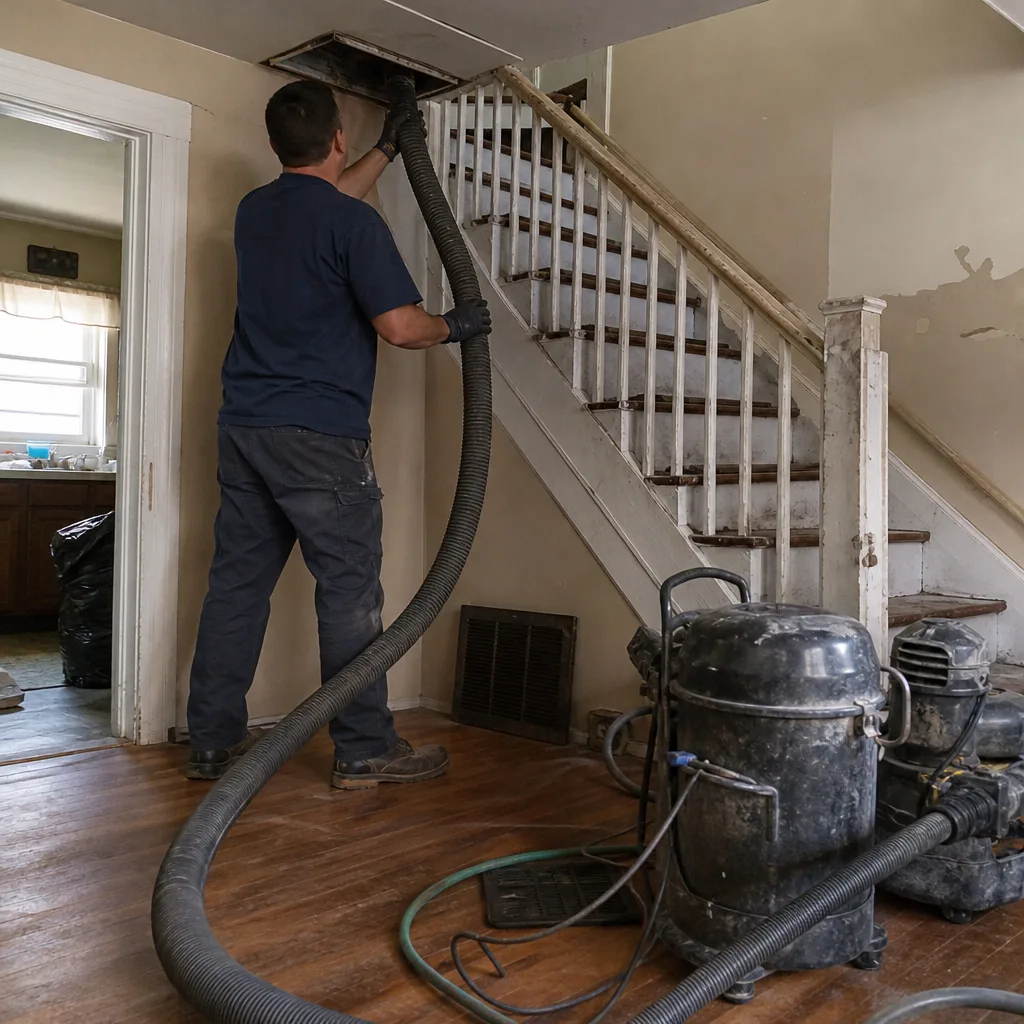 Before
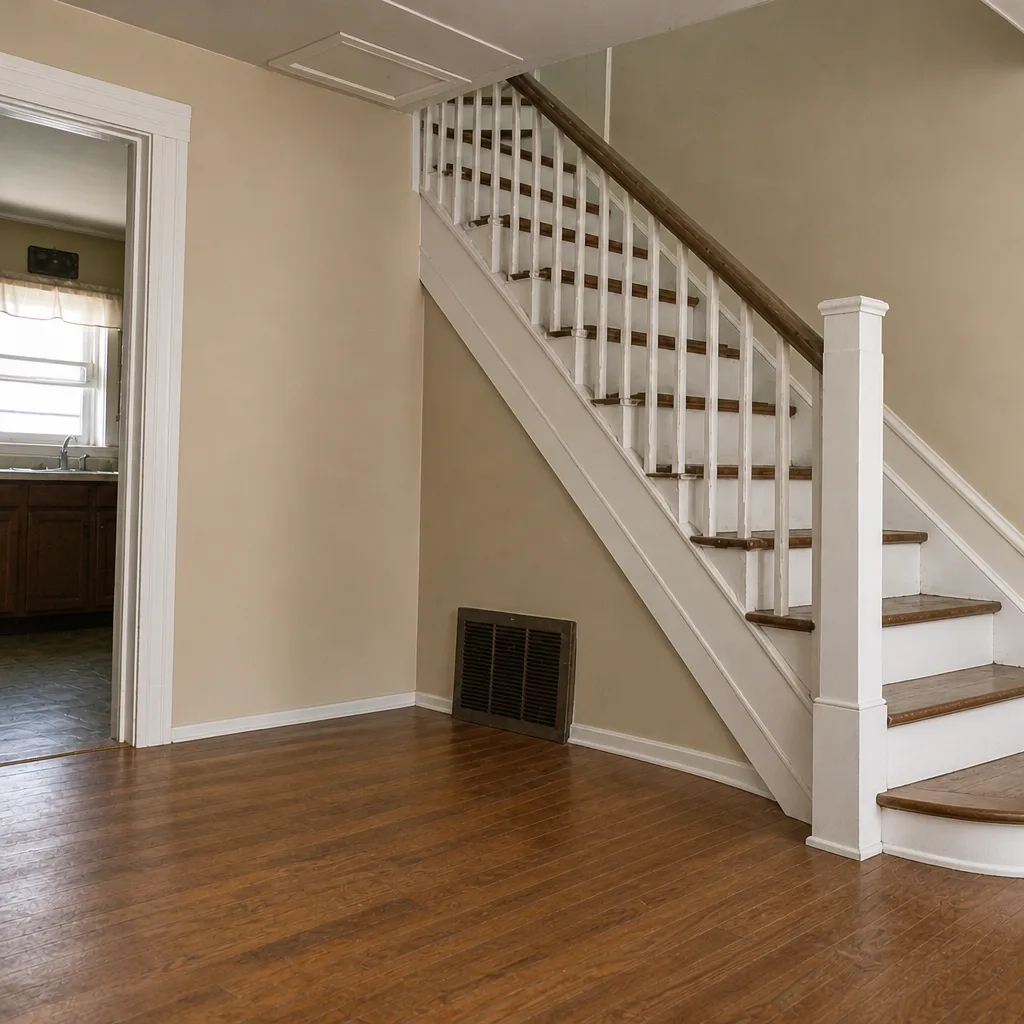 After
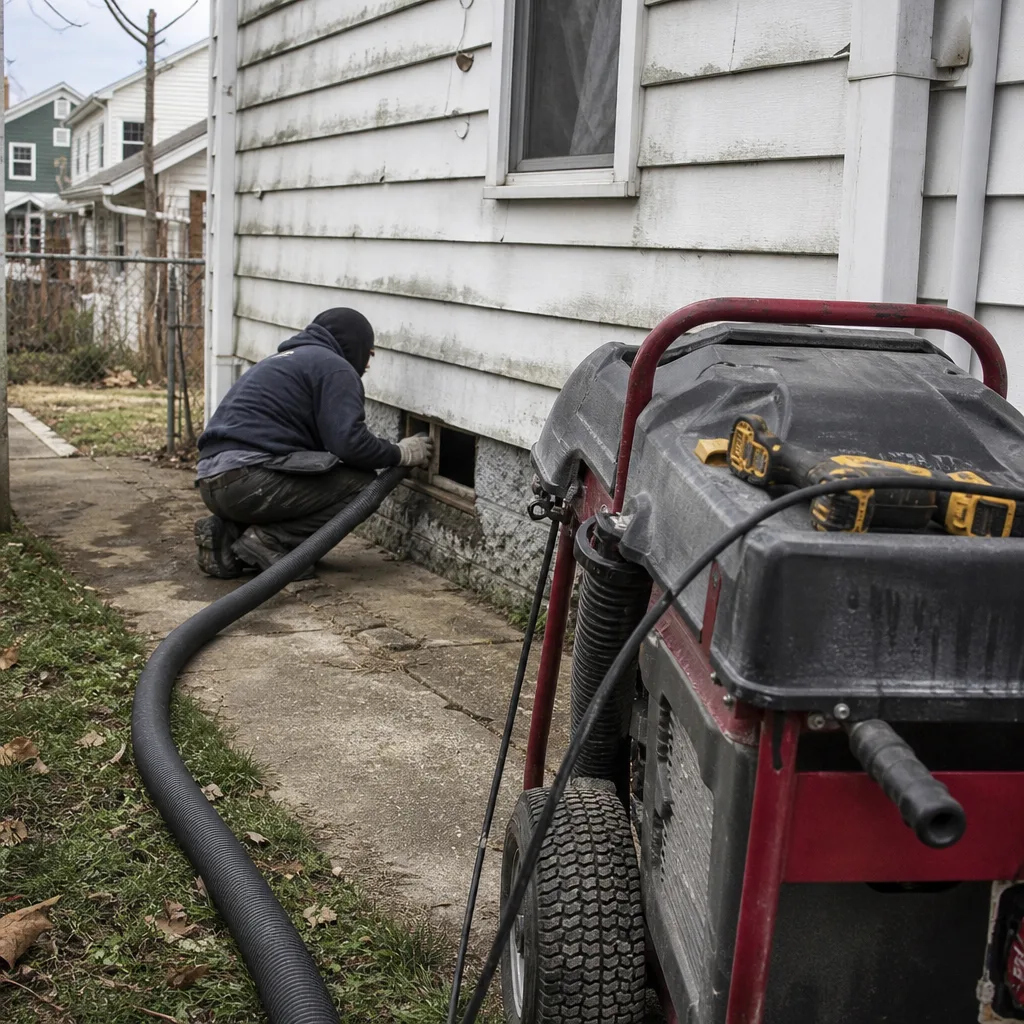 Before
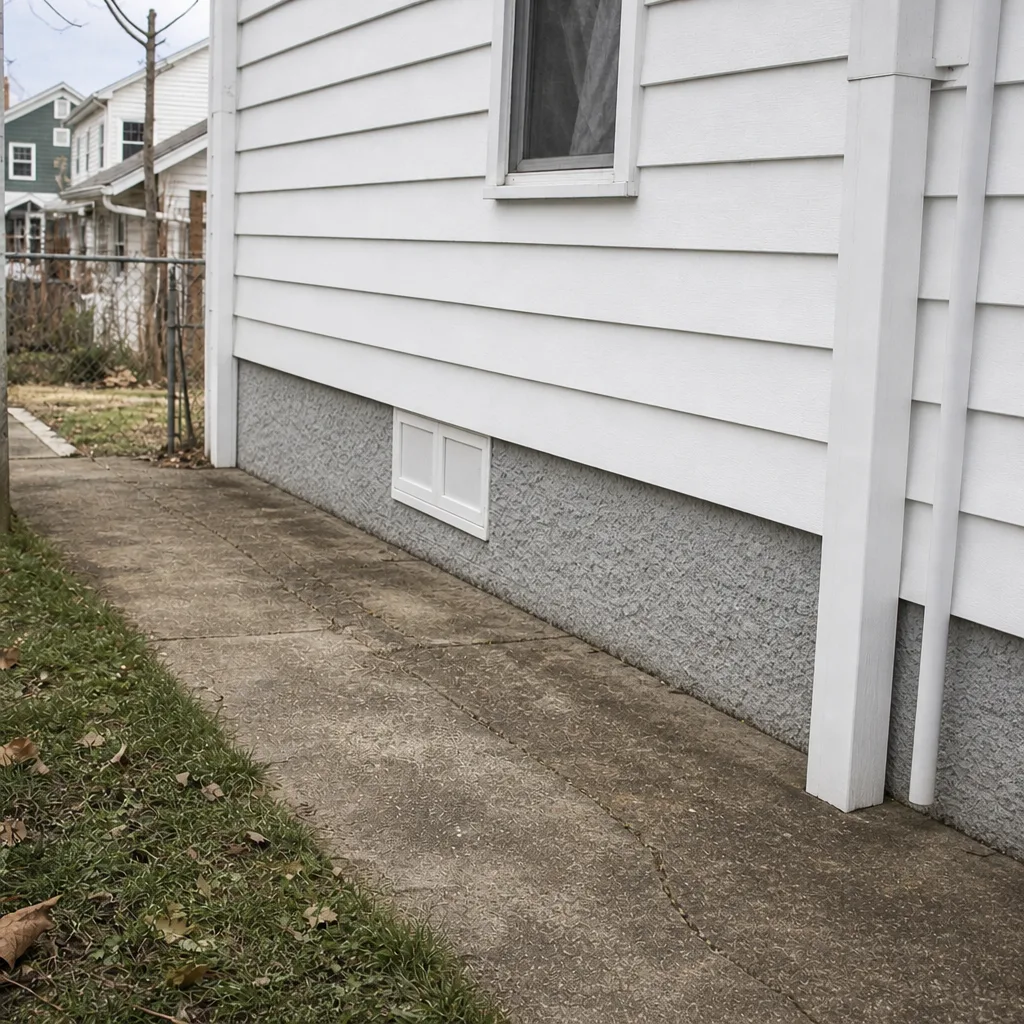 After
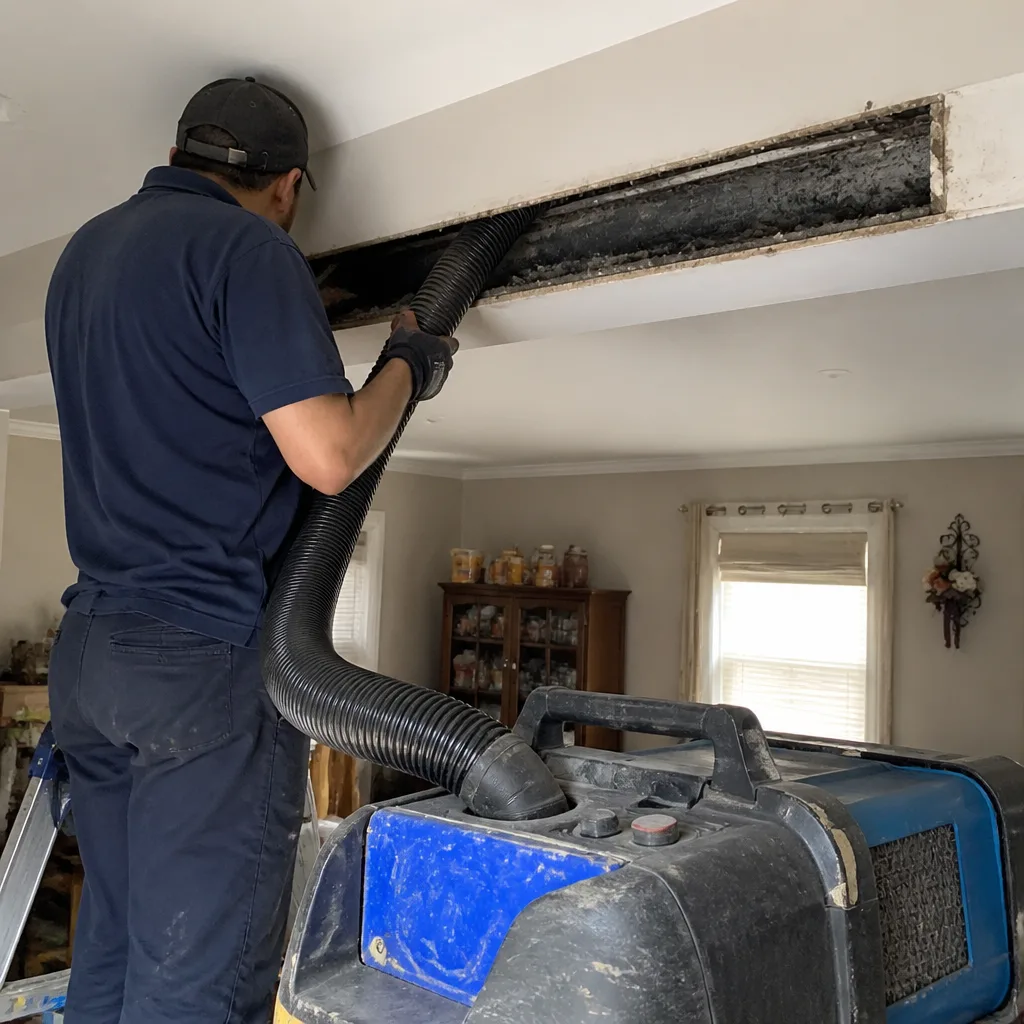 Before
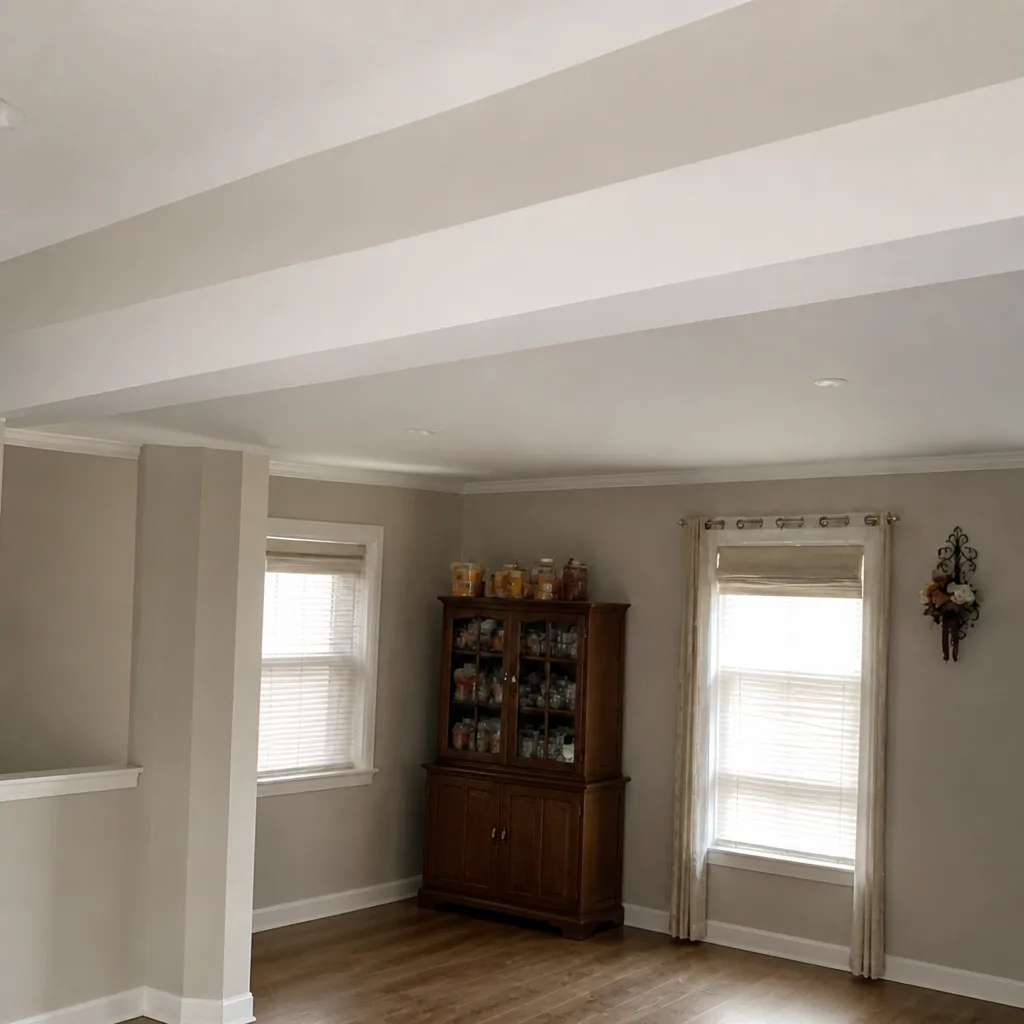 After
Frequently Asked Questions
You can clean the register boots, grilles, and filter housings with a shop vac, but you can’t clean the interior of a full duct run. A shop vac loses suction over distance and creates positive pressure as often as negative, which can push dust into your rooms instead of removing it. For the duct interior, professional extraction with negative pressure and agitation is the only method that removes settled debris. Call (866) 690-7933 for a free estimate and we’ll walk you through what your system actually needs.
We price per job rather than per vent, and the written estimate sets the final price. A standard residential clean in Frankford typically depends on the number of runs, the duct type, and whether the HVAC unit and dryer vent are included in the same visit. The honest answer is that a whole-system clean costs more than a register-only pass, because it’s a different job with different equipment. Call (866) 690-7933 for a free estimate – we’ll give you a flat price for your system before any work starts.
Because they’re often describing a smaller job. A cheap quote frequently covers a surface pass on the accessible registers with a consumer-grade vacuum, without containment, without HEPA filtration, and without agitation tools reaching into the runs. That’s not dishonest, but it’s not the same service. Ask what extraction unit, agitation tool, and containment equipment arrives on the job. The answers reveal what you’re actually paying for. Call (866) 690-7933 if you want a straight comparison.
Before-and-after photographs of your own registers, plenum, and any problem areas. A professional documents the work with images of the inside of the system, not just the exterior. Ask for those photos as part of the job, and ask what the technician found during the clean. If a company can’t produce documentation, that’s worth questioning. Call (866) 690-7933 to schedule an estimate and go over what a documented clean involves.
It depends on the home more than a calendar. A recently renovated house needs a clean once the dust has settled. A home with pets, allergy concerns, or a system running nearly year-round may want it more often. Older Frankford homes with mixed duct types and long runs tend to accumulate more. A visual check with a camera every year or so is a reasonable way to decide. Call (866) 690-7933 for an assessment and we’ll tell you what your system actually shows.
Yes, within limits. Clearing access to registers, removing and washing grilles, changing the filter, and photographing anything that looks off all make the professional clean more effective and sometimes trim the scope. What prep can’t do is substitute for the clean itself. If you find a disconnected flex run or a joint that’s pulled apart, flag it so it’s addressed before cleaning. Call (866) 690-7933 for a free estimate and we’ll tell you what prep actually helps for your home.
The Bottom Line
The DIY versus professional question for air duct cleaning isn’t really about skill. It’s about physics. Consumer tools can’t hold negative pressure across a long duct run, and without that pressure the debris moves into your rooms rather than out of them. DIY maintenance on registers, filters, and grilles is worth doing. A full-system clean requires contractor-grade extraction, agitation, and containment: equipment calibrated for the job. If you’re weighing the decision for your Frankford home, start with an honest assessment of what your system shows. Air Duct Cleaning Frankford offers free estimates in Frankford. Call (866) 690-7933. We answer 24/7. Fast dispatch from 7am to 7pm, Sunday through Friday.
Written by the team at Air Duct Cleaning Frankford.